Zurich University of the Arts · Immersive Arts Space

What Escapes the Model? The Limits of Formalisation in AI

October 29, 2026 – Zürich, Switzerland

Formalization Is the Limit

For a Critical Formalism after Machine Learning

Gianni Gastaldi

ETH Zürich Sorbonne Université

www.giannigastaldi.com

1. The critique of AI is ineffectual

  • 1. The critique of AI is ineffectual
  • 2. The contemporary critical matrix is broken
  • 3. Critique has been dogmatic about formalization
  • 4. Formalization can ground an epistemological critique
  • 5. Formalization can inform a theoretical critique
  • 6. Formalism is a realization, not a betrayal, of critique
  • 7. Conclusions: Formalism and arbitrariness

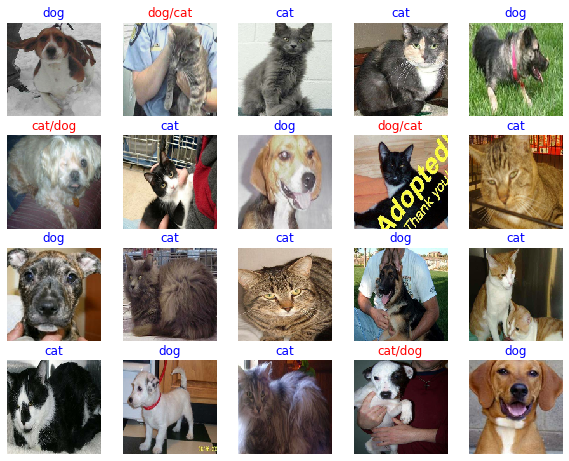
Unbelievable progress

2012/2014

2024/2026
Stochastic parrots vs. AGI

🤖🧠

LLMs have a relation
to natural language,
therefore they are like us

📉🦜

LLMs are not like us,
therefore they do not
and can not have any
relation to natural language

The internal critique of AI is disarmingly poor

  • Kirschenbaum (2023):
    Bender et al.’s (2021) paper “offers a disarmingly linear account of how language, communication, intention, and meaning work, one that would seem to sidestep decades of scholarship around these same issues in literary theory […] the passage would be red meat for a graduate critical-theory seminar.”

  • Underwood (2023):
    “The beautiful irony of this situation […] is that a generation of humanists trained on Foucault have now rallied around ‘On the Dangers of Stochastic Parrots’ to oppose a theory of language that their own disciplines invented, just at the moment when computer scientists are reluctantly beginning to accept it.”

2. The contemporary critical matrix is broken

  • 1. The critique of AI is ineffectual
  • 2. The contemporary critical matrix is broken
  • 3. Critique has been dogmatic about formalization
  • 4. Formalization can ground an epistemological critique
  • 5. Formalization can inform a theoretical critique
  • 6. Formalism is a realization, not a betrayal, of critique
  • 7. Conclusions: Formalism and arbitrariness

What is critique?

Anti-dogmaticity
Knowledge does not bear on substances,
but on phenomena

Conditionality
Knowledge is not absolute,
but relative to very precise conditions

Limitedness
The legitimacy of knowledge is not unbounded,
but circumscribed within fairly precise limits


The birth of contemporary critique
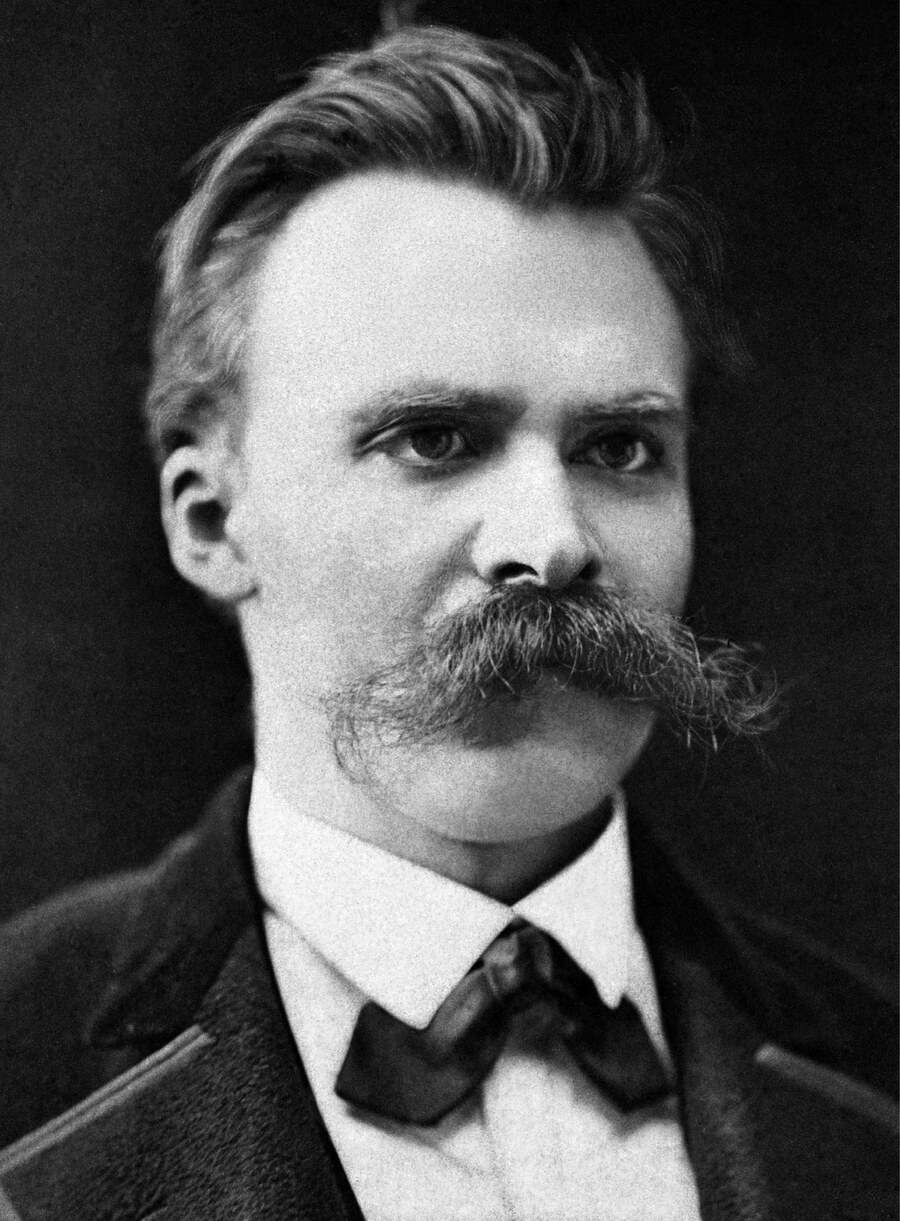
“In some remote corner of the universe, flickering in the light of the countless solar systems into which it had been poured, there was once a planet on which clever animals invented cognition. It was the most arrogant and most mendacious minute in the ‘history of the world’…”

On Truth and Lying in a Non-Moral Sense (Nietzsche, 1873)

The critical argumentative matrix

Knowledge is ineluctably conditioned by languageembodiment

(Epistemological)

Language is arbitrary

Any regularity in languagebodies and knowledge is political

(Political)

Language is arbitrary

We must resist inherited (linguisticembodied and cognitive) regularities and create new ones

(Aesthetic)

Critique radicalized

Anti-dogmaticity
The divorce between knowledge and substances is pushed to the extreme

Conditionality
Conditions become maximally local

Limitedness
The search for alternative grounds turns from a possibility into a duty

The critical argumentative matrix

Knowledge is ineluctably conditioned by language

(Epistemological)

Language is arbitrary?

Any regularity in language and knowledge is political

(Political)

Language is arbitrary?

We must resist inherited (linguistic and cognitive) regularities and create new ones

(Aesthetic)

The formalization of language theory

Logical Syntax of Language
(1934)
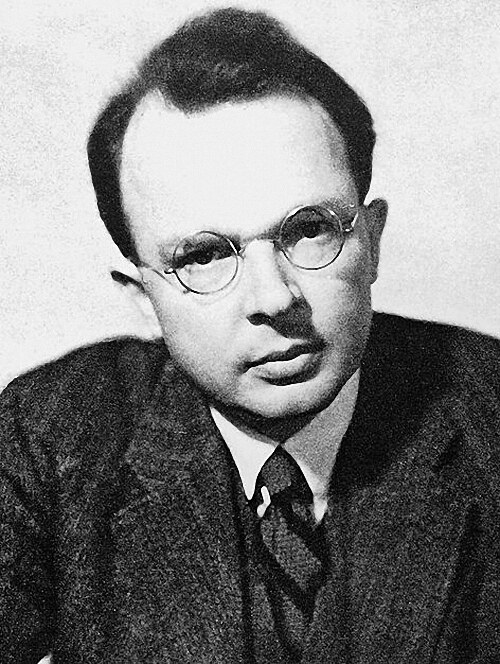
Logic
↓
Semantics

Information Theory
(1948)

Mathematics
↓
Pragmatics

Generative Linguistics
(1957)

Computer Science
↓
Syntax

Dogmatic use of formalism

Formal vs. Arbitrary

Formal vs. Material

Formal vs. Historical

FormalNatural

3. Critique has been dogmatic about formalization

  • 1. The critique of AI is ineffectual
  • 2. The contemporary critical matrix is broken
  • 3. Critique has been dogmatic about formalization
  • 4. Formalization can ground an epistemological critique
  • 5. Formalization can inform a theoretical critique
  • 6. Formalism is a realization, not a betrayal, of critique
  • 7. Conclusions: Formalism and arbitrariness

The other side of the same dogma

Formal vs. Arbitrary

Formal vs. Material

Formal vs. Historical

Arbitrary vs. Formal

Material vs. Formal

Historical vs. Formal

ArbitraryMaterialHistoricalCultural

Nietzsche against forms

  • “their eyes merely glide across the surface of things and see ‘forms’; nowhere does their perception lead into truth; instead it is content to receive stimuli and, as it were, to play with its fingers on the back of things.”

  • “…the great edifice of concepts exhibits the rigid regularity of a Roman columbarium, while logic breathes out that air of severity and coolness which is peculiar to mathematics.”

  • “…the only things we really know about them [the laws of nature] are things which we bring to bear on them: time and space, in other words, relations of succession and number.”

Empirical limits

Resists formalization Automated

Chess programs have stalled
(Dreyfus, 1965)
⟶ Mac Hack beats Dreyfus (1967)
Deep Blue beats Kasparov (1997)

Go is out of reach ⟶ AlphaGo beats Lee Sedol (2016)

Winograd Schema Challenge
(Levesque et al., 2012)
⟶ “The Defeat of the Winograd Schema Challenge”
(Kocijan et al., 2023)

… ⟶ …

Empirical limits are overcome as soon as they are set
not by formalization, but by automation

Not a betrayal, but a success

Embodied and materialist critique Current AI

Know-how is tacit, not rules
(Dreyfus, 1972; Polanyi, 1966)
⟶ No rules, only weights

Intelligence needs no representations
(Brooks, 1991; Varela et al., 1991)
⟶ Distributed, sub-symbolic activations

Skills come from immersion and practice
(Dreyfus & Dreyfus, 1988)
⟶ Learning from data, not specification

Action answers the whole situation
(Suchman, 1987)
⟶ Extreme context sensitivity

Knowing is doing
(Barad, 2007)
⟶ Performance taken as competence

Matter, not form, acts
(Bennett, 2010)
⟶ Compute, energy, data at scale

Critical Formalism

AI is not formalization, but automation disguised as science

Formalization is the one thing AI models miss

4. Formalization can ground an epistemological critique

  • 1. The critique of AI is ineffectual
  • 2. The contemporary critical matrix is broken
  • 3. Critique has been dogmatic about formalization
  • 4. Formalization can ground an epistemological critique
  • 5. Formalization can inform a theoretical critique
  • 6. Formalism is a realization, not a betrayal, of critique
  • 7. Conclusions: Formalism and arbitrariness

LLMs as programs computing functions

Neural LM

❓

🧠❓

🤖❓

🦜❓

💻❓

🗺️❓

\(f\)❗

Computable
Function
\(f\colon \mathbb{R}^n \overset{f_1}{\longrightarrow} \mathbb{R}^{n_1} \overset{f_2}{\longrightarrow}\cdots \overset{f_K}{\longrightarrow} \mathbb{R}^{n_K} \overset{g}{\longrightarrow}\mathbb{R}^m\)

Computable
Function
\(f\colon \mathbb{R}^n \overset{f_1}{\longrightarrow} \mathbb{R}^{n_1} \overset{f_2}{\longrightarrow}\cdots \overset{f_K}{\longrightarrow} \mathbb{R}^{n_K} \overset{g}{\longrightarrow}\mathbb{R}^m\)

Turing
Machine
(Turing, 1937)

Recursive
Function
(Gödel, 1934/1986)

Lambda
Term
(Church, 1936)

\(\Longleftrightarrow\)

\(\Longleftrightarrow\)
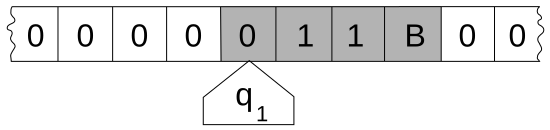
credit: Nynexman4464

\(\lambda m . \lambda n . \lambda f . \lambda x . m f ( n f x)\)

Empirical evaluation

\(P := {\color{blue}{\lambda m . \lambda n . \lambda f . \lambda x . m f ( n f x)}}\)
\(P' := {\color{#00a0c0}{\lambda r . \lambda s .\lambda f . \lambda x . f(f(f(f(fx))))}}\)

\(0\): \(\lambda f . \lambda x . x\)
\(1\): \(\lambda f . \lambda x . fx\)
\(2\): \({\color{orange}{\lambda f . \lambda x . f(fx)}}\)
\(3\): \({\color{green}{\lambda f . \lambda x . f(f(fx))}}\)
\(4\): \(\lambda f . \lambda x . f(f(f(fx)))\)
\(5\): \({\color{red}{\lambda f . \lambda x . f(f(f(f(fx))))}}\)
\(\ldots\)
\(n\): \(\lambda f . \lambda x .\underbrace{f(\ldots(f}_{n \text{ times}}x)\ldots)\)

\({\color{blue}{\lambda m . \lambda n . \lambda f . \lambda x . m f ( n f x)}}\,{\color{orange}{(\lambda f . \lambda x . f(fx))}}\,{\color{green}{(\lambda f . \lambda x . f(f(fx)))}}\)

\({\color{#00a0c0}{\lambda r . \lambda s .\lambda f . \lambda x . f(f(f(f(fx))))}}\,{\color{orange}{(\lambda f . \lambda x . f(fx))}}\,{\color{green}{(\lambda f . \lambda x . f(f(fx)))}}\)

\(\rightsquigarrow\)

\({\color{red}{\lambda f . \lambda x . f(f(f(f(fx))))}}\)

Empirical interpretability

\(P :={\color{blue}{\lambda m . \lambda n . \lambda f . \lambda x . m f ( n f x)}}\)
\(P' := {\color{#00a0c0}{\lambda r . \lambda s .\lambda f . \lambda x . f(f(f(f(fx))))}}\)

\(0\): \(\lambda f . \lambda x . x\)
\(1\): \(\lambda f . \lambda x . fx\)
\(2\): \({\color{orange}{\lambda f . \lambda x . f(fx)}}\)
\(3\): \({\color{green}{\lambda f . \lambda x . f(f(fx))}}\)
\(4\): \(\lambda f . \lambda x . f(f(f(fx)))\)
\(5\): \({\color{red}{\lambda f . \lambda x . f(f(f(f(fx))))}}\)
\(\ldots\)
\(n\): \(\lambda f . \lambda x .\underbrace{f(\ldots(f}_{n \text{ times}}x)\ldots)\)

\({\color{blue}{\lambda m . \lambda n . \lambda f . \lambda x . m f ( n f x)}}\,{\color{orange}{(\lambda g . \lambda y . g(gy))}}\,{\color{green}{(\lambda h . \lambda z . h(h(hz)))}}\)

\(\rightsquigarrow\)

\({\color{blue}{\lambda n . \lambda f . \lambda x . {\color{orange}{(\lambda g . \lambda y . g(gy))}}\, f\, (n f x)}}\,{\color{green}{(\lambda h . \lambda z . h(h(hz)))}}\)

\({\color{blue}{\lambda f . \lambda x . {\color{orange}{(\lambda g . \lambda y . g(gy))}}\, f\, ({\color{green}{(\lambda h . \lambda z . h(h(hz)))}}\, f x)}}\)

\({\color{blue}{\lambda f . \lambda x . {\color{orange}{(\lambda y . {\color{blue}{f}}({\color{blue}{f}}y))}}\, ({\color{green}{(\lambda h . \lambda z . h(h(hz)))}}\, f x)}}\)

\({\color{blue}{\lambda f . \lambda x . {\color{orange}{(\lambda y . {\color{blue}{f}}({\color{blue}{f}}y))}}\, ({\color{green}{(\lambda z . {\color{blue}{f}}({\color{blue}{f}}({\color{blue}{f}}z)))}}\, x)}}\)

\({\color{blue}{\lambda f . \lambda x . {\color{orange}{(\lambda y . {\color{blue}{f}}({\color{blue}{f}}y))}}\, (f(f(fx)))}}\)

\({\color{red}{\lambda f . \lambda x . f(f(f(f(fx))))}}\)

Empirical interpretability

P := λm. λn. (λd. (λp. λg. λx. p (λu. λw. w (u g)) (λy. x) (λy. y)) ((λp. λg. λx. p (λu. λw. w (u g)) (λy. x) (λy. y)) ((λp. λg. λx. p (λu. λw. w (u g)) (λy. x) (λy. y)) ((λp. λg. λx. p (λu. λw. w (u g)) (λy. x) (λy. y)) d)))) ((λc. (λp. λg. λx. p (λu. λw. w (u g)) (λy. x) (λy. y)) ((λp. λg. λx. p (λu. λw. w (u g)) (λy. x) (λy. y)) ((λp. λg. λx. p (λu. λw. w (u g)) (λy. x) (λy. y)) ((λp. λg. λx. p (λu. λw. w (u g)) (λy. x) (λy. y)) c)))) ((λb. (λp. λg. λx. p (λu. λw. w (u g)) (λy. x) (λy. y)) ((λp. λg. λx. p (λu. λw. w (u g)) (λy. x) (λy. y)) ((λp. λg. λx. p (λu. λw. w (u g)) (λy. x) (λy. y)) ((λp. λg. λx. p (λu. λw. w (u g)) (λy. x) (λy. y)) b)))) ((λd. (λs. λz. s (s z)) (λp. λg. λx. p (λu. λw. w (u g)) (λy. x) (λy. y)) d) ((λc. (λs. λz. s (s z)) (λp. λs. λz. s (p s z)) c) ((λa. (λs. λz. s (s (s (s z)))) (λp. λs. λz. s (p s z)) a) ((λe. (λs. λz. s z) (λp. λg. λx. p (λu. λw. w (u g)) (λy. x) (λy. y)) e) ((λd. (λs. λz. s (s (s z))) (λp. λg. λx. p (λu. λw. w (u g)) (λy. x) (λy. y)) d) ((λa. (λs. λz. s (s z)) (λp. λg. λx. p (λu. λw. w (u g)) (λy. x) (λy. y)) a) ((λa. λs. λz. s (a s z)) ((λe. (λs. λz. s (s (s (s z)))) (λp. λg. λx. p (λu. λw. w (u g)) (λy. x) (λy. y)) e) ((λb. (λp. λg. λx. p (λu. λw. w (u g)) (λy. x) (λy. y)) ((λp. λg. λx. p (λu. λw. w (u g)) (λy. x) (λy. y)) b)) ((λb. (λs. λz. s z) (λp. λg. λx. p (λu. λw. w (u g)) (λy. x) (λy. y)) b) ((λf. λs. λz. s (s (s (s (f s z))))) ((λb. (λs. λz. s z) (λp. λg. λx. p (λu. λw. w (u g)) (λy. x) (λy. y)) b) ((λd. (λs. λz. s z) (λp. λs. λz. s (p s z)) d) ((λb. λs. λz. s (s (b s z))) ((λc. λs. λz. s (s (s (s (c s z))))) ((λf. (λp. λg. λx. p (λu. λw. w (u g)) (λy. x) (λy. y)) ((λp. λg. λx. p (λu. λw. w (u g)) (λy. x) (λy. y)) ((λp. λg. λx. p (λu. λw. w (u g)) (λy. x) (λy. y)) ((λp. λg. λx. p (λu. λw. w (u g)) (λy. x) (λy. y)) f)))) ((λd. (λs. λz. s (s (s z))) (λp. λs. λz. s (p s z)) d) ((λc. λs. λz. s (s (s (s (c s z))))) ((λb. λs. λz. s (b s z)) ((λf. (λs. λz. s z) (λp. λg. λx. p (λu. λw. w (u g)) (λy. x) (λy. y)) f) ((λb. (λs. λz. s (s (s z))) (λp. λs. λz. s (p s z)) b) ((λf. (λp. λg. λx. p (λu. λw. w (u g)) (λy. x) (λy. y)) ((λp. λg. λx. p (λu. λw. w (u g)) (λy. x) (λy. y)) f)) ((λc. λs. λz. s (s (c s z))) ((λf. (λp. λg. λx. p (λu. λw. w (u g)) (λy. x) (λy. y)) f) ((λe. λs. λz. s (s (e s z))) ((λd. (λp. λg. λx. p (λu. λw. w (u g)) (λy. x) (λy. y)) d) ((λb. (λs. λz. s (s z)) (λp. λg. λx. p (λu. λw. w (u g)) (λy. x) (λy. y)) b) ((λd. λs. λz. s (s (s (d s z)))) ((λf. λs. λz. s (f s z)) ((λe. (λs. λz. s (s (s z))) (λp. λg. λx. p (λu. λw. w (u g)) (λy. x) (λy. y)) e) ((λb. (λs. λz. s (s z)) (λp. λs. λz. s (p s z)) b) ((λf. (λp. λg. λx. p (λu. λw. w (u g)) (λy. x) (λy. y)) ((λp. λg. λx. p (λu. λw. w (u g)) (λy. x) (λy. y)) ((λp. λg. λx. p (λu. λw. w (u g)) (λy. x) (λy. y)) f))) ((λd. λs. λz. s (s (d s z))) ((λc. (λs. λz. s z) (λp. λg. λx. p (λu. λw. w (u g)) (λy. x) (λy. y)) c) ((λb. λs. λz. s (s (s (b s z)))) ((λe. (λp. λg. λx. p (λu. λw. w (u g)) (λy. x) (λy. y)) ((λp. λg. λx. p (λu. λw. w (u g)) (λy. x) (λy. y)) e)) ((λc. (λs. λz. s (s (s (s z)))) (λp. λs. λz. s (p s z)) c) (λs. λz. (λa. (λp. λg. λx. p (λu. λw. w (u g)) (λy. x) (λy. y)) ((λp. λg. λx. p (λu. λw. w (u g)) (λy. x) (λy. y)) ((λp. λg. λx. p (λu. λw. w (u g)) (λy. x) (λy. y)) ((λp. λg. λx. p (λu. λw. w (u g)) (λy. x) (λy. y)) a)))) ((λc. (λs. λz. s (s (s (s z)))) (λp. λg. λx. p (λu. λw. w (u g)) (λy. x) (λy. y)) c) ((λa. (λp. λg. λx. p (λu. λw. w (u g)) (λy. x) (λy. y)) ((λp. λg. λx. p (λu. λw. w (u g)) (λy. x) (λy. y)) ((λp. λg. λx. p (λu. λw. w (u g)) (λy. x) (λy. y)) ((λp. λg. λx. p (λu. λw. w (u g)) (λy. x) (λy. y)) a)))) ((λa. (λs. λz. s (s (s (s z)))) (λp. λg. λx. p (λu. λw. w (u g)) (λy. x) (λy. y)) a) ((λa. (λp. λg. λx. p (λu. λw. w (u g)) (λy. x) (λy. y)) ((λp. λg. λx. p (λu. λw. w (u g)) (λy. x) (λy. y)) ((λp. λg. λx. p (λu. λw. w (u g)) (λy. x) (λy. y)) ((λp. λg. λx. p (λu. λw. w (u g)) (λy. x) (λy. y)) a)))) ((λa. λs. λz. s (s (s (s (a s z))))) ((λb. λs. λz. s (s (s (b s z)))) ((λd. λs. λz. s (s (s (d s z)))) ((λe. λs. λz. s (s (e s z))) ((λb. (λp. λg. λx. p (λu. λw. w (u g)) (λy. x) (λy. y)) ((λp. λg. λx. p (λu. λw. w (u g)) (λy. x) (λy. y)) ((λp. λg. λx. p (λu. λw. w (u g)) (λy. x) (λy. y)) b))) ((λa. (λp. λg. λx. p (λu. λw. w (u g)) (λy. x) (λy. y)) ((λp. λg. λx. p (λu. λw. w (u g)) (λy. x) (λy. y)) ((λp. λg. λx. p (λu. λw. w (u g)) (λy. x) (λy. y)) ((λp. λg. λx. p (λu. λw. w (u g)) (λy. x) (λy. y)) a)))) ((λd. (λs. λz. s (s (s z))) (λp. λg. λx. p (λu. λw. w (u g)) (λy. x) (λy. y)) d) ((λd. λs. λz. s (s (s (s (d s z))))) ((λc. λs. λz. s (s (s (s (c s z))))) ((λf. (λs. λz. s (s z)) (λp. λs. λz. s (p s z)) f) ((λd. (λs. λz. s (s (s (s z)))) (λp. λs. λz. s (p s z)) d) ((λc. (λs. λz. s (s (s (s z)))) (λp. λg. λx. p (λu. λw. w (u g)) (λy. x) (λy. y)) c) ((λd. (λs. λz. s (s (s (s z)))) (λp. λg. λx. p (λu. λw. w (u g)) (λy. x) (λy. y)) d) ((λf. (λs. λz. s (s z)) (λp. λs. λz. s (p s z)) f) ((λc. (λp. λg. λx. p (λu. λw. w (u g)) (λy. x) (λy. y)) c) ((λe. λs. λz. s (s (e s z))) ((λf. λs. λz. s (s (s (f s z)))) ((λb. (λs. λz. s (s (s (s z)))) (λp. λs. λz. s (p s z)) b) ((λc. (λs. λz. s (s z)) (λp. λs. λz. s (p s z)) c) m))))))))))))))))))))))) s ((λb. (λs. λz. s (s (s (s z)))) (λp. λg. λx. p (λu. λw. w (u g)) (λy. x) (λy. y)) b) ((λd. (λp. λg. λx. p (λu. λw. w (u g)) (λy. x) (λy. y)) ((λp. λg. λx. p (λu. λw. w (u g)) (λy. x) (λy. y)) ((λp. λg. λx. p (λu. λw. w (u g)) (λy. x) (λy. y)) ((λp. λg. λx. p (λu. λw. w (u g)) (λy. x) (λy. y)) d)))) ((λa. (λp. λg. λx. p (λu. λw. w (u g)) (λy. x) (λy. y)) ((λp. λg. λx. p (λu. λw. w (u g)) (λy. x) (λy. y)) a)) ((λd. (λp. λg. λx. p (λu. λw. w (u g)) (λy. x) (λy. y)) d) ((λc. (λp. λg. λx. p (λu. λw. w (u g)) (λy. x) (λy. y)) ((λp. λg. λx. p (λu. λw. w (u g)) (λy. x) (λy. y)) ((λp. λg. λx. p (λu. λw. w (u g)) (λy. x) (λy. y)) c))) ((λc. (λp. λg. λx. p (λu. λw. w (u g)) (λy. x) (λy. y)) ((λp. λg. λx. p (λu. λw. w (u g)) (λy. x) (λy. y)) ((λp. λg. λx. p (λu. λw. w (u g)) (λy. x) (λy. y)) c))) ((λe. (λs. λz. s (s (s z))) (λp. λg. λx. p (λu. λw. w (u g)) (λy. x) (λy. y)) e) ((λb. (λs. λz. s (s (s (s z)))) (λp. λs. λz. s (p s z)) b) ((λe. (λs. λz. s z) (λp. λs. λz. s (p s z)) e) ((λe. (λs. λz. s z) (λp. λg. λx. p (λu. λw. w (u g)) (λy. x) (λy. y)) e) ((λa. λs. λz. s (a s z)) ((λc. (λp. λg. λx. p (λu. λw. w (u g)) (λy. x) (λy. y)) ((λp. λg. λx. p (λu. λw. w (u g)) (λy. x) (λy. y)) ((λp. λg. λx. p (λu. λw. w (u g)) (λy. x) (λy. y)) c))) ((λb. (λp. λg. λx. p (λu. λw. w (u g)) (λy. x) (λy. y)) b) ((λe. (λs. λz. s (s z)) (λp. λg. λx. p (λu. λw. w (u g)) (λy. x) (λy. y)) e) ((λc. (λp. λg. λx. p (λu. λw. w (u g)) (λy. x) (λy. y)) c) ((λe. λs. λz. s (e s z)) ((λa. λs. λz. s (s (a s z))) ((λb. λs. λz. s (s (s (s (b s z))))) ((λd. (λs. λz. s (s z)) (λp. λg. λx. p (λu. λw. w (u g)) (λy. x) (λy. y)) d) ((λc. (λs. λz. s (s z)) (λp. λg. λx. p (λu. λw. w (u g)) (λy. x) (λy. y)) c) ((λd. (λs. λz. s (s z)) (λp. λg. λx. p (λu. λw. w (u g)) (λy. x) (λy. y)) d) ((λa. (λs. λz. s z) (λp. λg. λx. p (λu. λw. w (u g)) (λy. x) (λy. y)) a) ((λc. (λp. λg. λx. p (λu. λw. w (u g)) (λy. x) (λy. y)) ((λp. λg. λx. p (λu. λw. w (u g)) (λy. x) (λy. y)) ((λp. λg. λx. p (λu. λw. w (u g)) (λy. x) (λy. y)) c))) ((λb. (λs. λz. s (s z)) (λp. λs. λz. s (p s z)) b) ((λb. (λs. λz. s (s z)) (λp. λg. λx. p (λu. λw. w (u g)) (λy. x) (λy. y)) b) ((λc. (λs. λz. s (s (s z))) (λp. λs. λz. s (p s z)) c) ((λa. λs. λz. s (s (s (a s z)))) ((λd. (λs. λz. s (s (s (s z)))) (λp. λs. λz. s (p s z)) d) ((λb. (λs. λz. s (s (s (s z)))) (λp. λs. λz. s (p s z)) b) ((λc. (λs. λz. s z) (λp. λs. λz. s (p s z)) c) ((λd. λs. λz. s (d s z)) ((λc. (λs. λz. s (s (s (s z)))) (λp. λs. λz. s (p s z)) c) ((λa. λs. λz. s (s (s (a s z)))) ((λf. (λp. λg. λx. p (λu. λw. w (u g)) (λy. x) (λy. y)) ((λp. λg. λx. p (λu. λw. w (u g)) (λy. x) (λy. y)) ((λp. λg. λx. p (λu. λw. w (u g)) (λy. x) (λy. y)) f))) ((λb. λs. λz. s (s (s (b s z)))) ((λa. λs. λz. s (a s z)) ((λd. λs. λz. s (d s z)) n)))))))))))))))))))))))))))))))))))) s z)))))))))))))))))))))))))))))))))))))))))

The implicit structure of data

5. Formalization can inform a theoretical critique

  • 1. The critique of AI is ineffectual
  • 2. The contemporary critical matrix is broken
  • 3. Critique has been dogmatic about formalization
  • 4. Formalization can ground an epistemological critique
  • 5. Formalization can inform a theoretical critique
  • 6. Formalism is a realization, not a betrayal, of critique
  • 7. Conclusions: Formalism and arbitrariness

Formal explainability

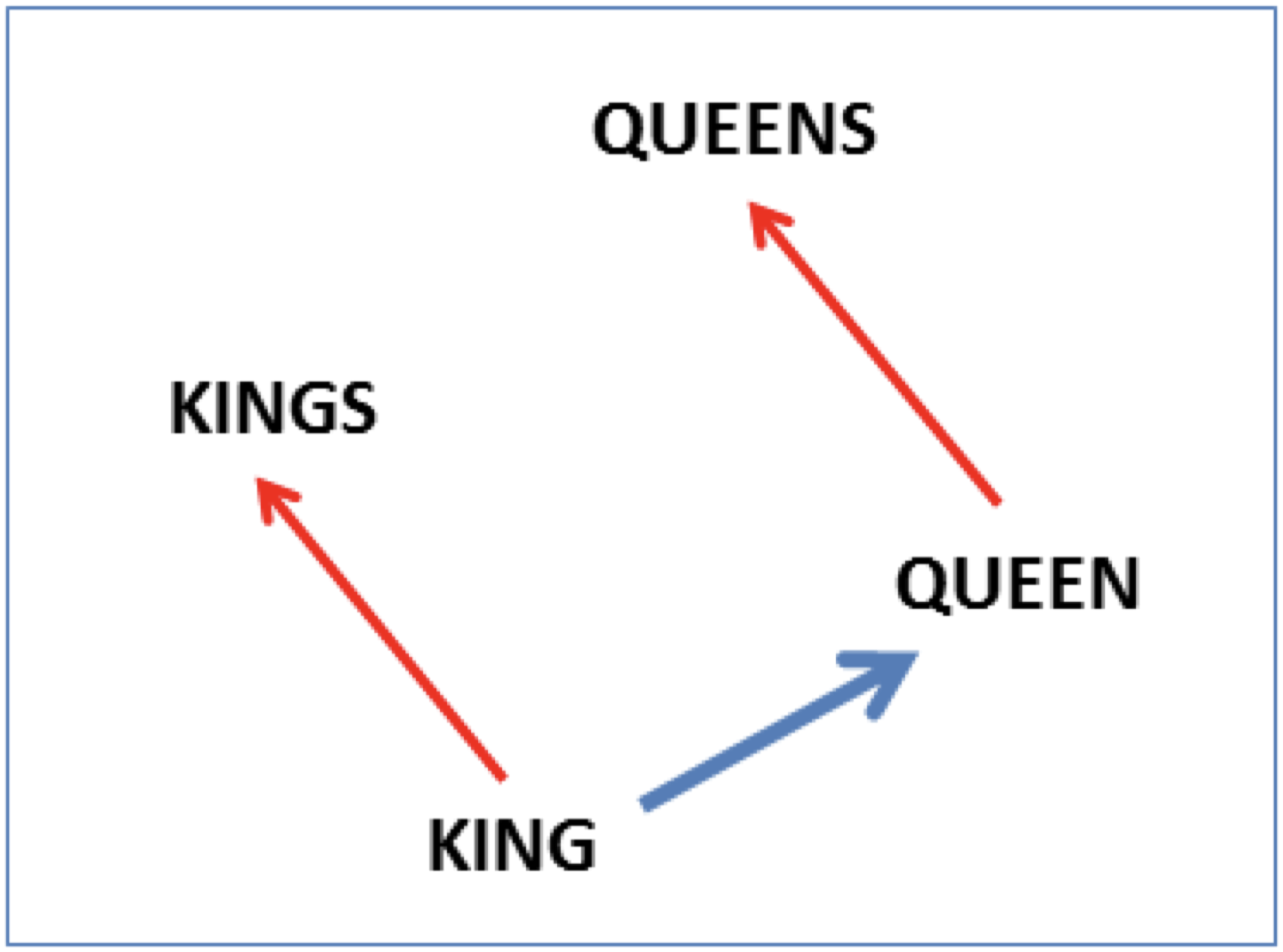
(Sennrich et al., 2016) (Mikolov et al., 2013) (Vaswani et al., 2017)

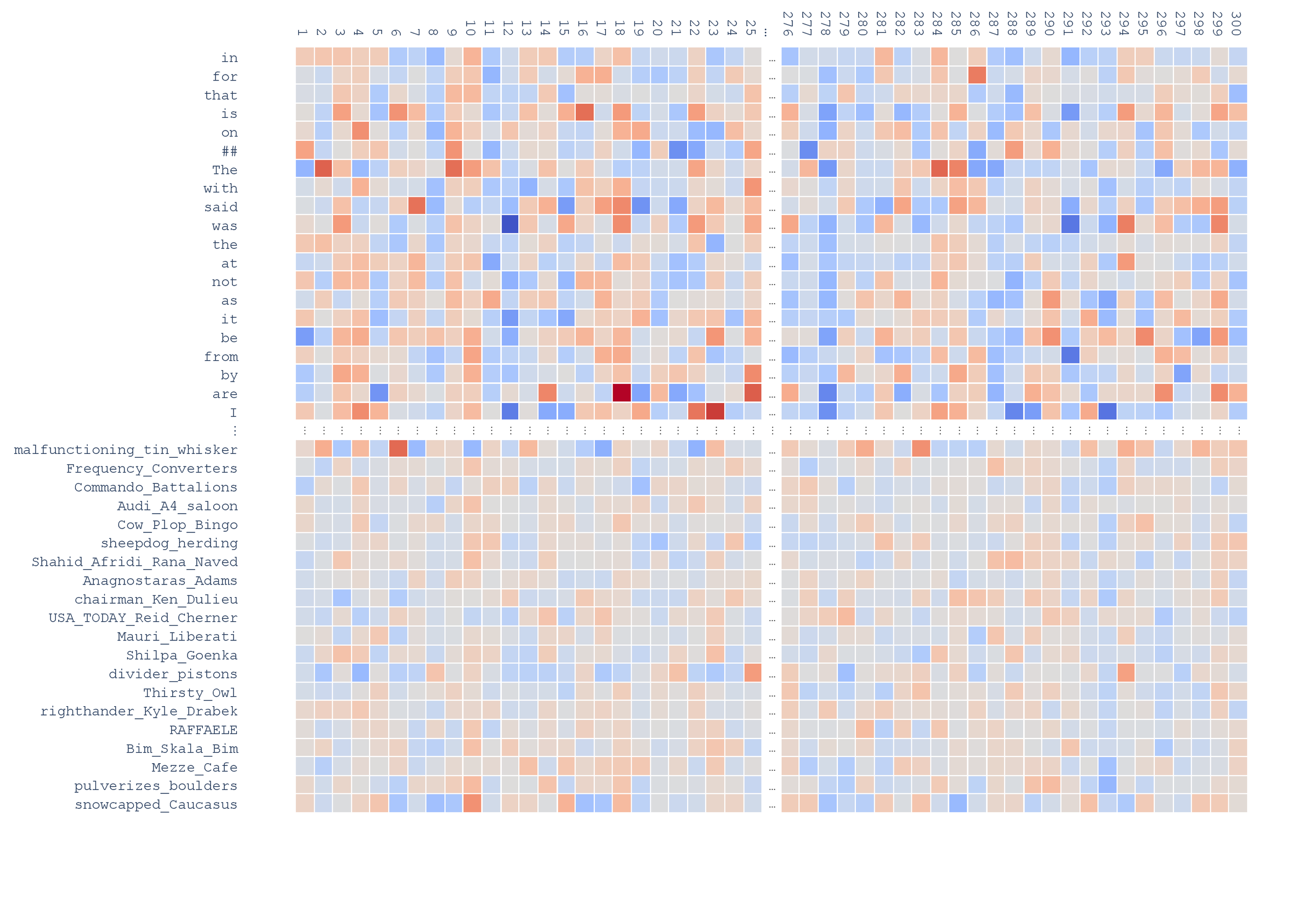
The structure of embeddings

word2vec explained (Levy & Goldberg, 2014)

\(\ell = \sum\limits_{w\in V_w} \sum\limits_{c\in V_c} \#(w,c) \left(\log \sigma (\vec{w} \cdot \vec{c} ) + k \cdot \mathbb{E}_{c_N \sim P_D} [\log \sigma(-\vec{w}\cdot \vec{c}_N)]\right)\)

\(\dfrac{\partial \ell }{\partial (\vec{w} \cdot \vec{c})} = 0 \quad\text{when}\quad \vec{w} \cdot \vec{c} = \log \left(\dfrac{\#(w,c) \cdot |D|}{\#(w)\cdot \#(c)}\right) - \log k\)

\(\vec{w} \cdot \vec{c} = {\color{#ff3333}{\mathrm{PMI}(w,c)}} - \log k\)

word2vec performs an implicit, low-dimensional factorization of a pointwise mutual information word-context matrix

The Singular Value Decomposition (SVD) provides an exact solution to this problem

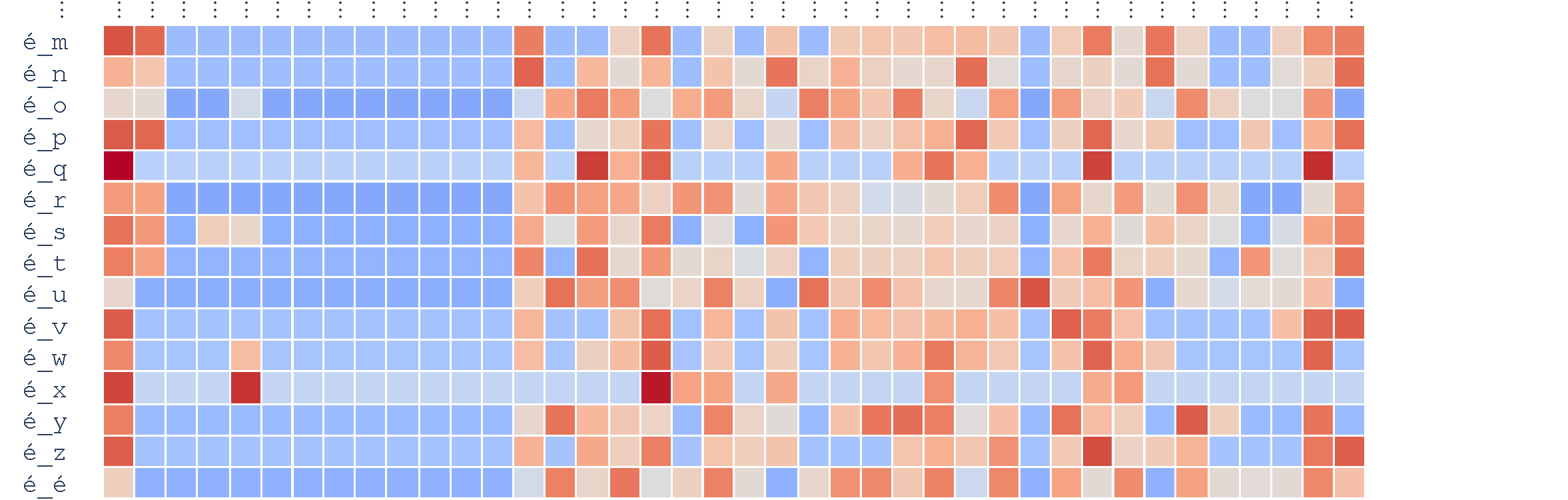
Example: characters in Wikipedia

\(\color{red}{W} = \{\texttt{-},\texttt{/},\texttt{0},\texttt{1},\texttt{2},\texttt{3},\texttt{4},\texttt{5},\texttt{6},\texttt{7},\texttt{8},\texttt{9},\texttt{=},\texttt{a},\texttt{b},\texttt{c},\ldots,\texttt{w},\texttt{x},\texttt{y},\texttt{z},\texttt{é}\}\)
\(\color{blue}{C} = W \times W = \{\texttt{(-,-)},\texttt{(-,/)},\texttt{(-,0)},\ldots,\texttt{(é,z)},\texttt{(é,é)}\}\)

\(\begin{aligned} M_{\color{red}{w}\color{blue}{c}} &= \mathrm{pmi}(\color{red}{w},\color{blue}{c})\\ &= \log \frac{p(\color{red}{w},\color{blue}{c})}{p(\color{red}{w})\,p(\color{blue}{c})} \end{aligned}\)
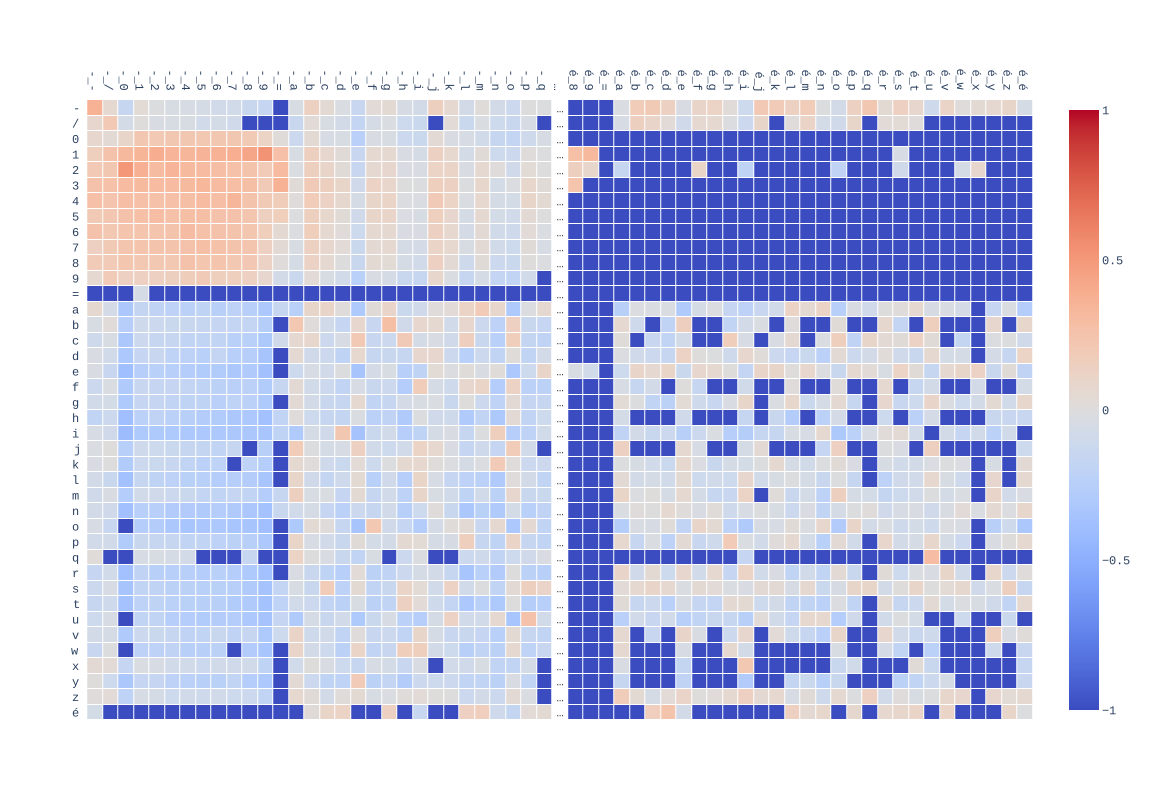
SVD of a PMI matrix

\(U\)
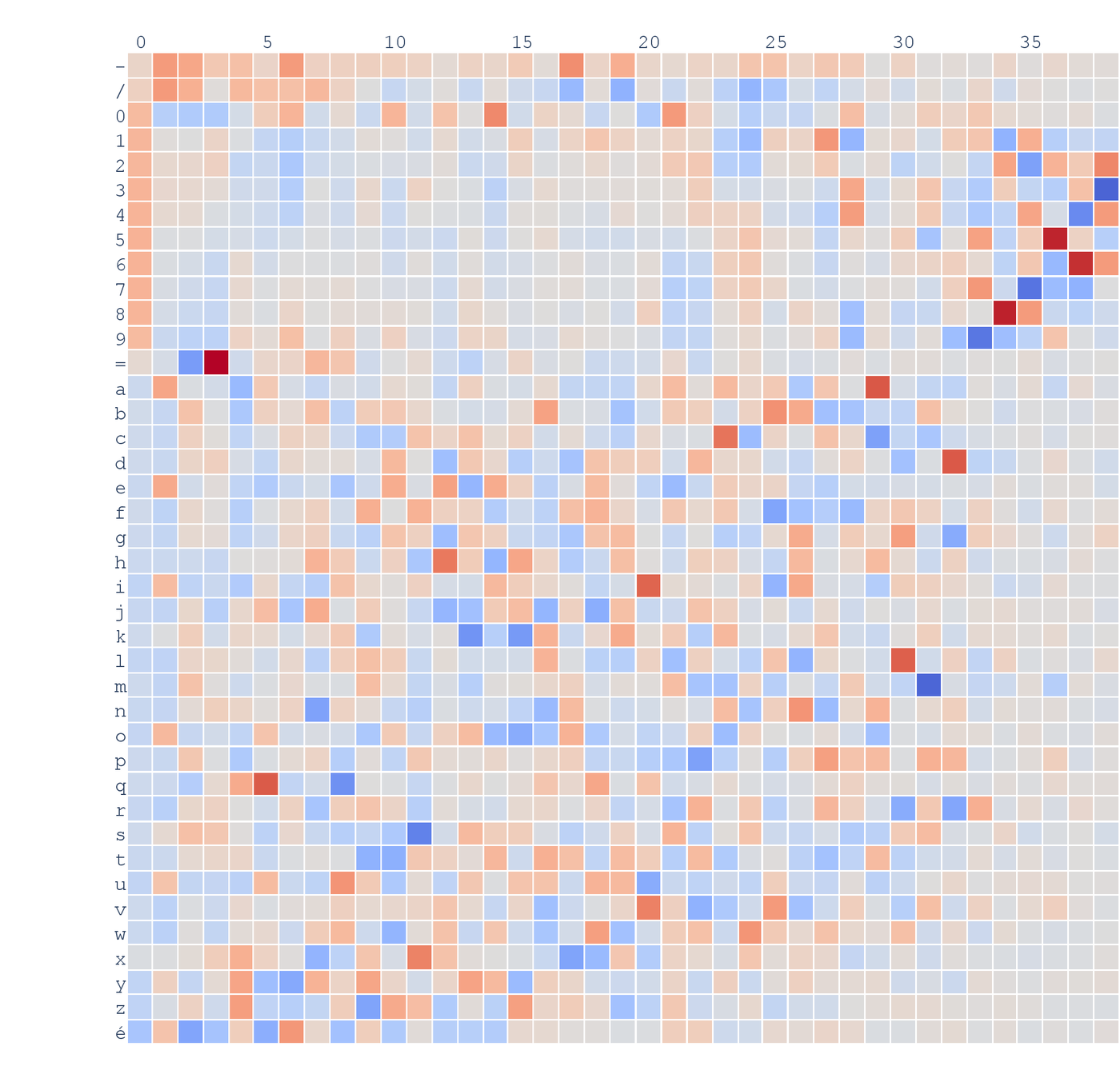
\(\Sigma\)
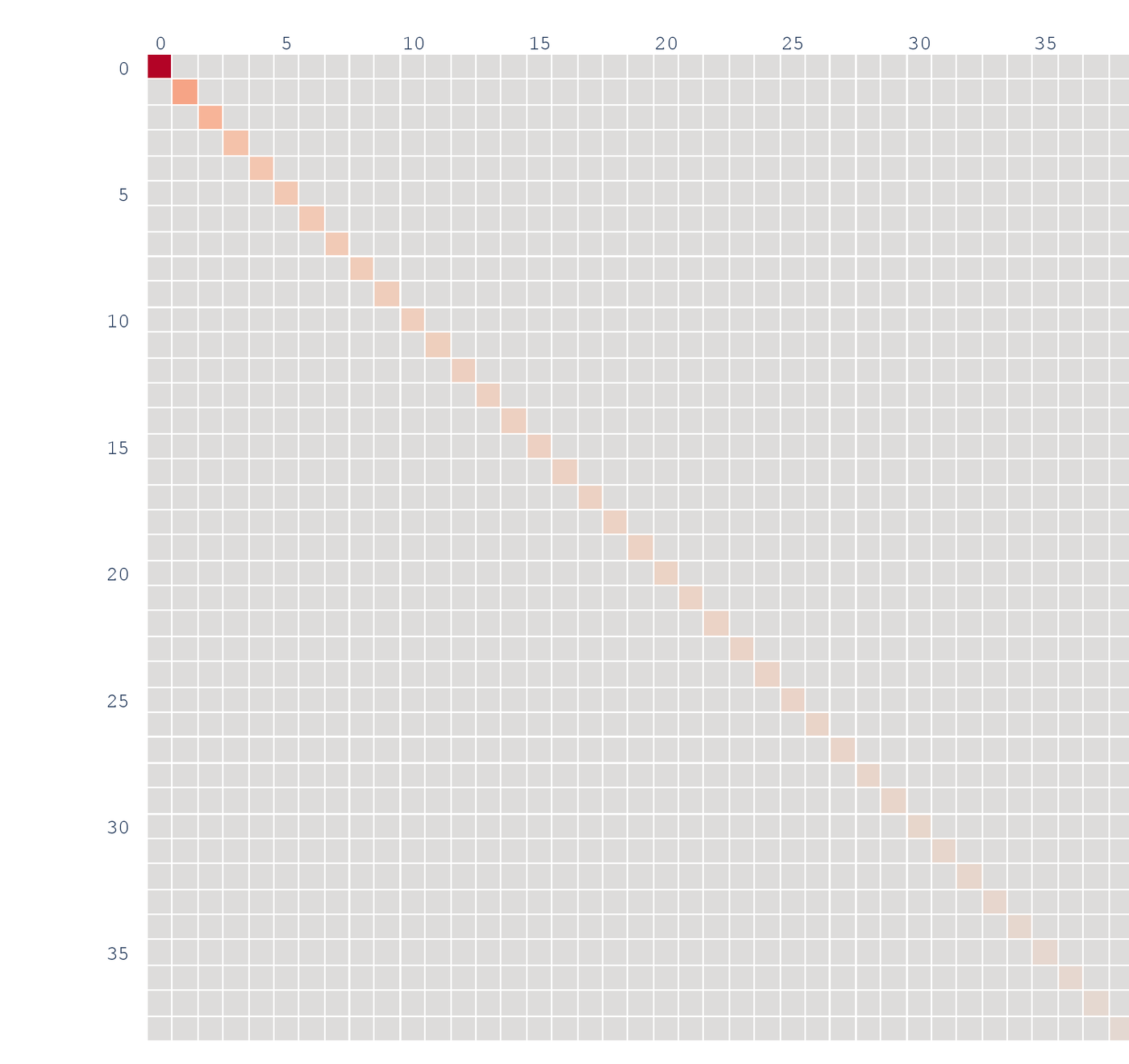
\(V^T\)
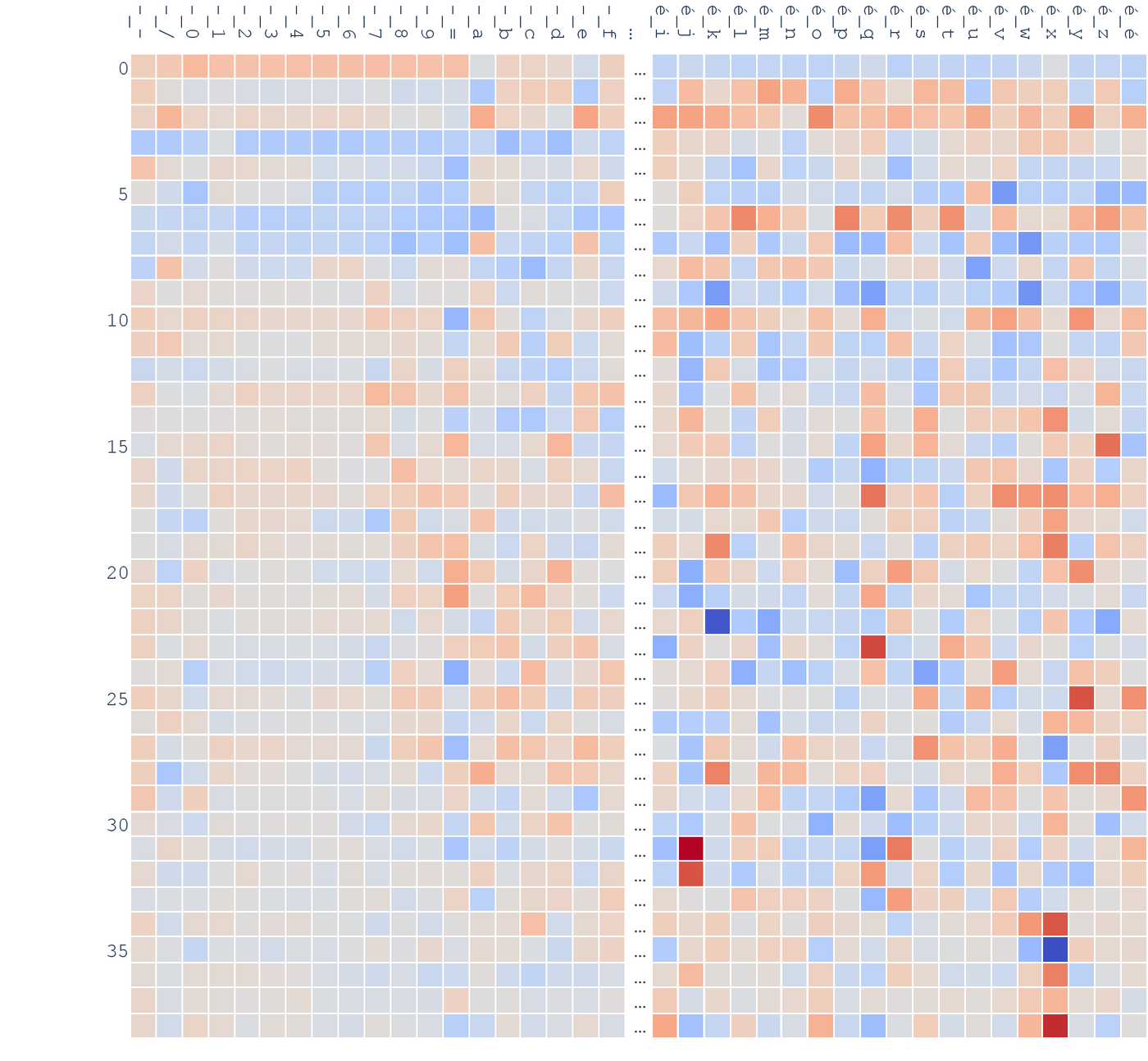
Truncate

\(U \times \Sigma\)
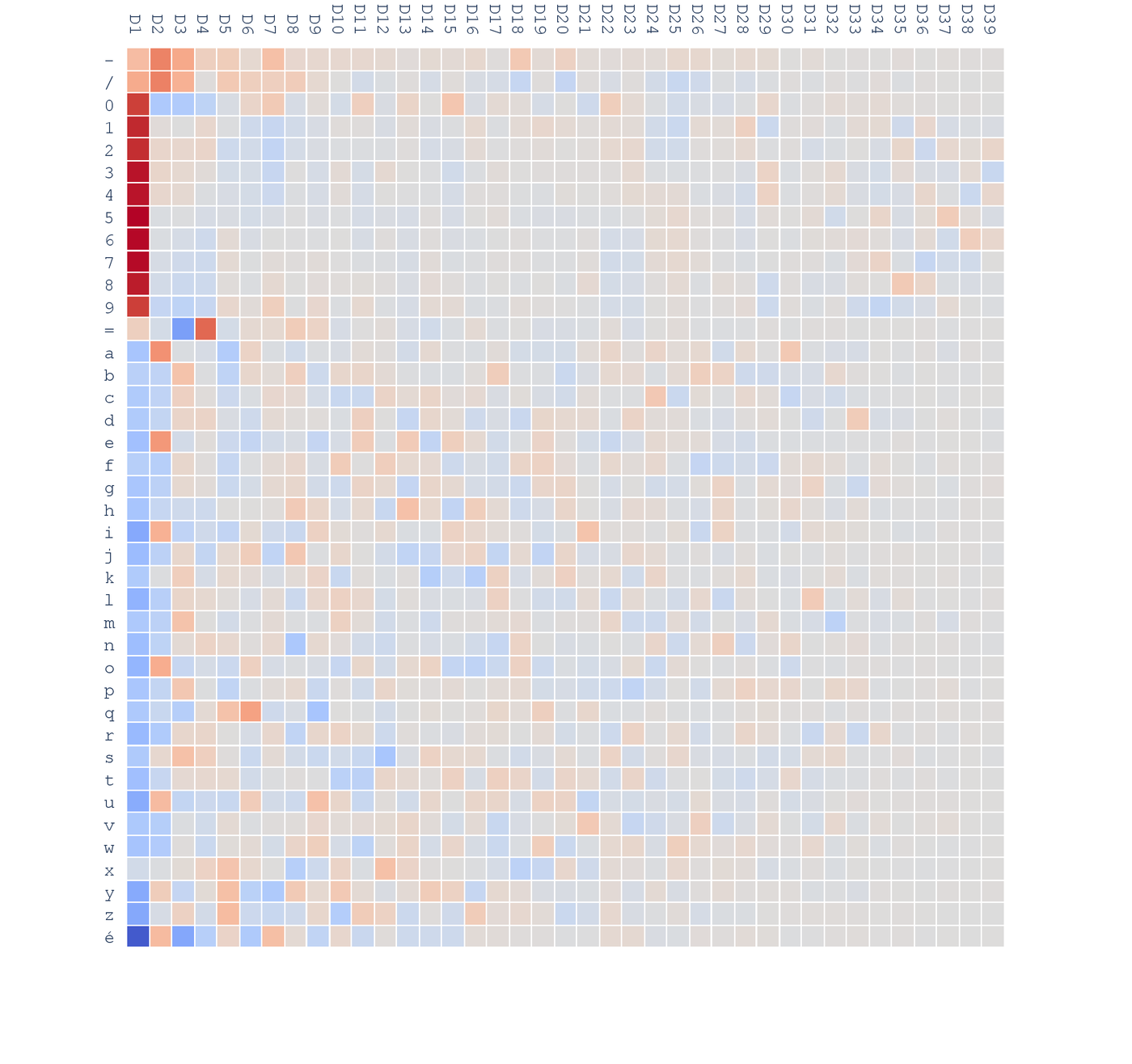
\(\hat{U} \times \hat{\Sigma}\)

Embed

\(\hat{U} \times \hat{\Sigma}\)

The structure of embeddings

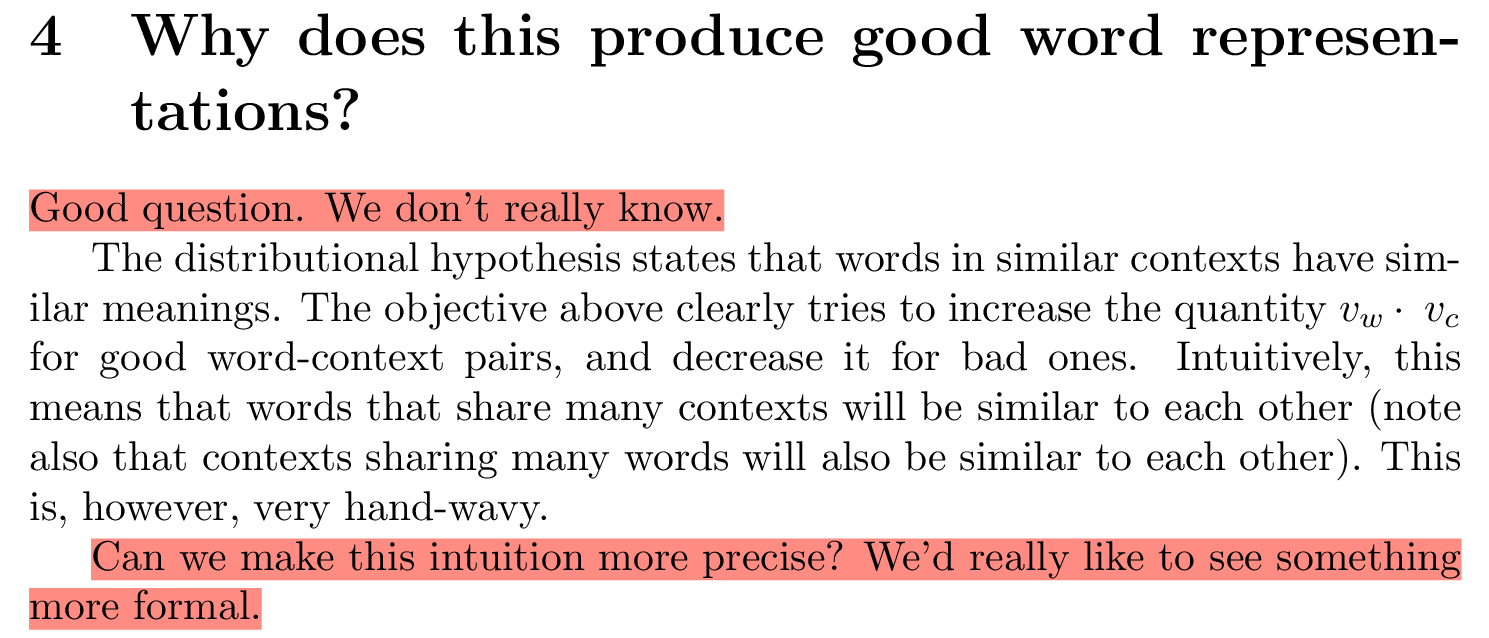
But why?

Embeddings as functions over sets

\(\color{red}{W} = \{\texttt{-},\texttt{/},\texttt{0},\texttt{1},\texttt{2},\texttt{3},\texttt{4},\texttt{5},\texttt{6},\texttt{7},\texttt{8},\texttt{9},\texttt{=},\texttt{a},\texttt{b},\texttt{c},\ldots,\texttt{w},\texttt{x},\texttt{y},\texttt{z},\texttt{é}\}\)
\(\color{blue}{C} = W \times W = \{\texttt{(-,-)},\texttt{(-,/)},\texttt{(-,0)},\ldots,\texttt{(é,z)},\texttt{(é,é)}\}\)

\[\begin{aligned} M \colon {\color{red}{W}} \times {\color{blue}{C}} &\to \mathbb{R}\\ ({\color{red}{w}},{\color{blue}{c}}) &\mapsto \mathrm{pmi}({\color{red}{w}},{\color{blue}{c}}) \end{aligned}\]

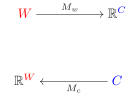
\[\begin{aligned} M_w \colon {\color{red}{W}} &\to \mathbb{R}^{\color{blue}{C}}\\ {\color{red}{w}} &\mapsto {\color{blue}{M(w,-)}} \end{aligned}\]

\[\begin{aligned} M_c \colon {\color{blue}{C}} &\to \mathbb{R}^{\color{red}{W}}\\ {\color{blue}{c}} &\mapsto {\color{red}{M(-,c)}} \end{aligned}\]
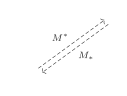
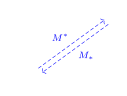
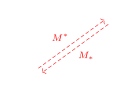
\(M^* \colon \mathbb{R}^{\color{red}{W}} \to \mathbb{R}^{\color{blue}{C}}\)
\(M_* \colon \mathbb{R}^{\color{blue}{C}} \to \mathbb{R}^{\color{red}{W}}\)

Embeddings as functions over sets

\({\color{red}{M_* M^*}} \colon \mathbb{R}^{\color{red}{W}} \to \mathbb{R}^{\color{red}{W}}\)

\({\color{blue}{M^* M_*}} \colon \mathbb{R}^{\color{blue}{C}} \to \mathbb{R}^{\color{blue}{C}}\)

\[\begin{aligned} \{{\color{red}{u_1}}, \ldots, {\color{red}{u_m}}\} &\subset \mathbb{R}^{\color{red}{W}}\\ \{{\color{blue}{v_1}}, \ldots, {\color{blue}{v_n}}\} &\subset \mathbb{R}^{\color{blue}{C}}\\ \{\lambda_1, \ldots, \lambda_{\min(m,n)}&, 0, \ldots, 0\} \end{aligned}\]

\({\color{red}{M_* M^* u_i}} = \lambda_i {\color{red}{u_i}}\)
\({\color{blue}{M^* M_* v_i}} = \lambda_i {\color{blue}{v_i}}\)

The \({\color{red}{u_i}}\) and \({\color{blue}{v_i}}\) are (linear)
fixed points!
\[M = U\Sigma V^T \qquad \begin{aligned} U &:= [{\color{red}{u_1}}, \ldots, {\color{red}{u_m}}]\\ V &:= [{\color{blue}{v_1}}, \ldots, {\color{blue}{v_n}}]\\ \Sigma &:= \left[\begin{smallmatrix} \sqrt{\lambda_1} & \cdots & 0 \\ \vdots & \ddots & \vdots \\ 0 & \cdots & \sqrt{\lambda_r} \end{smallmatrix}\right] \end{aligned}\]

\(M_* M^*\) as a covariance matrix
\(M^*\)
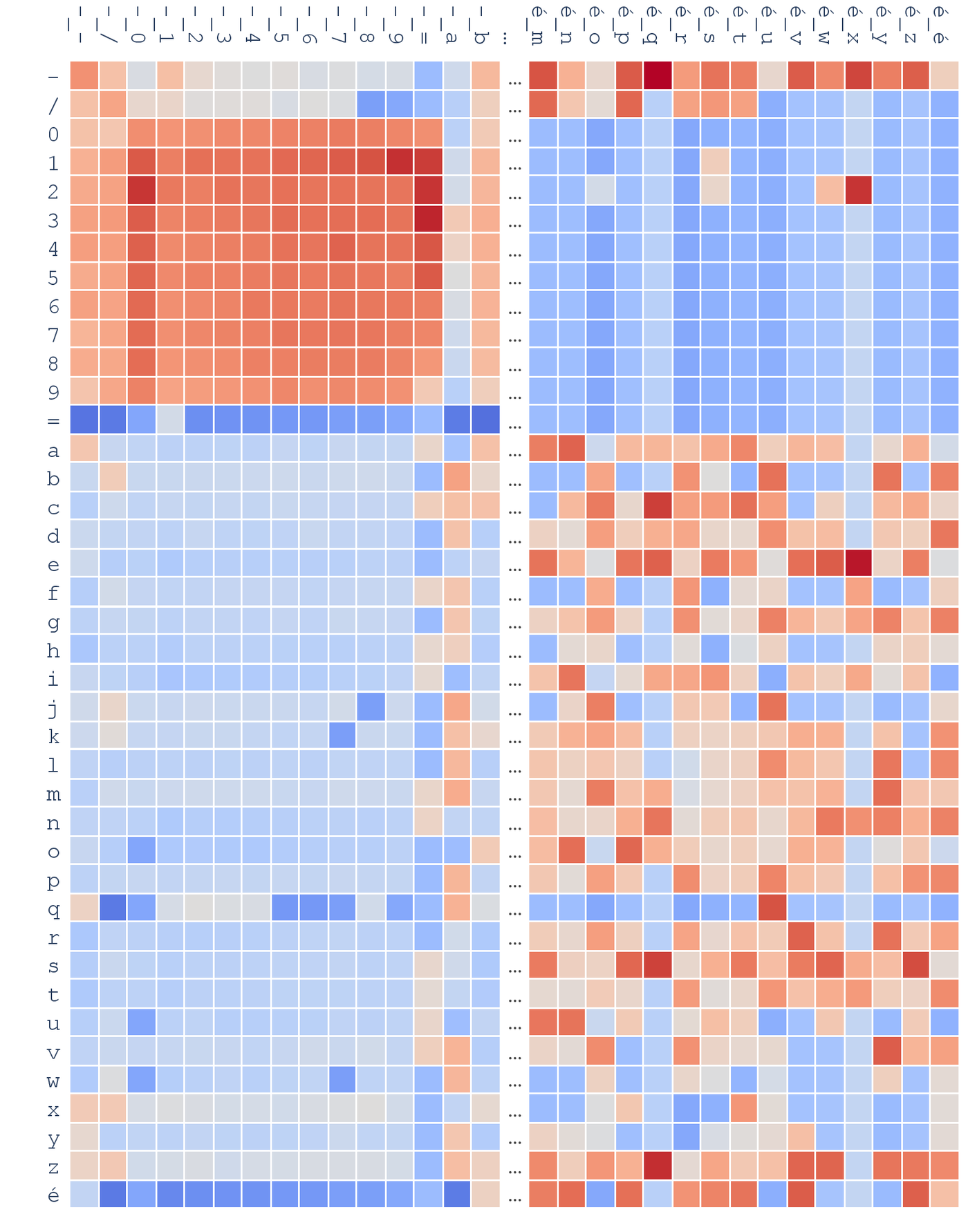
\(M_*\)
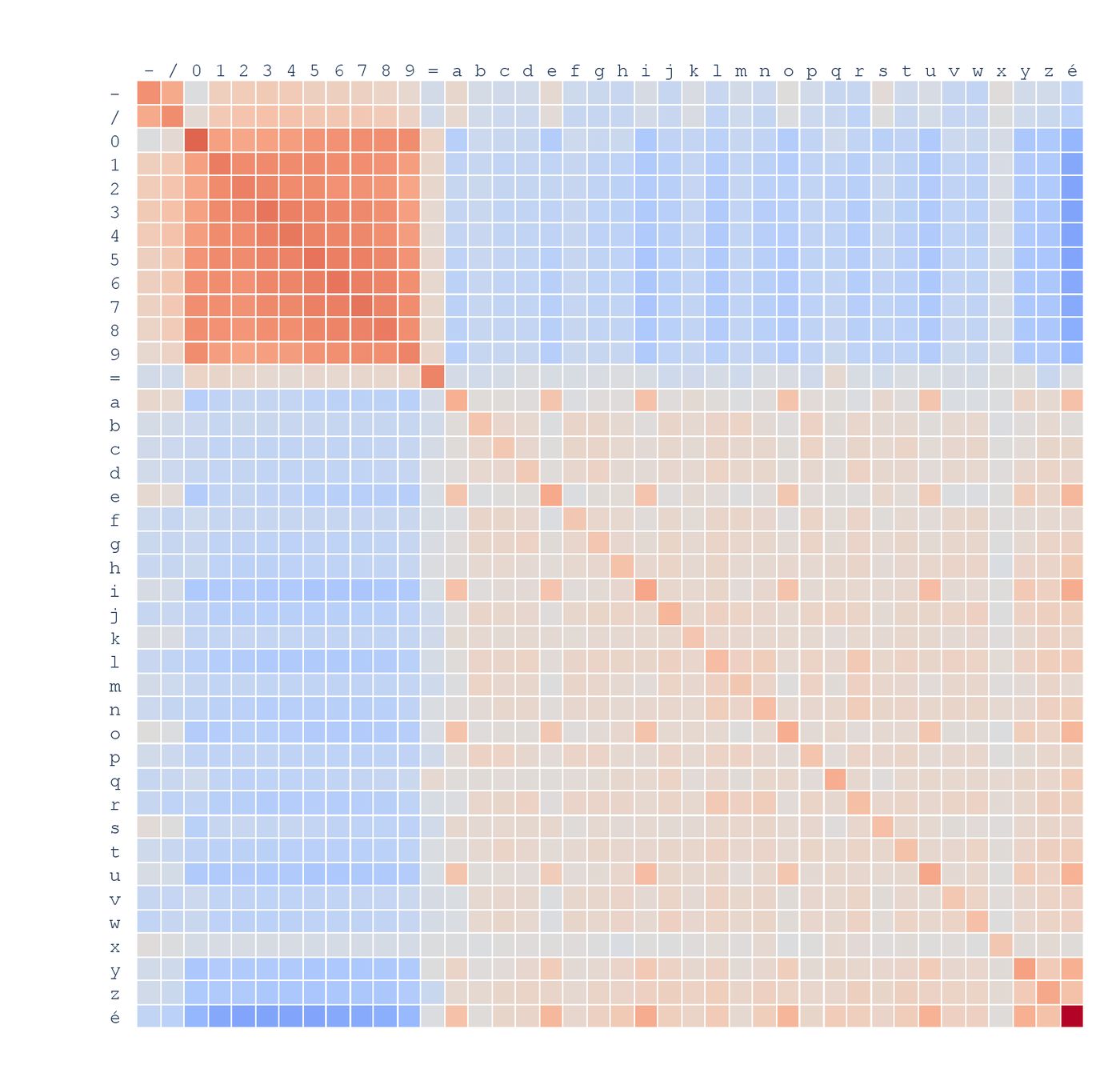
\({\color{red}{M_* M^*}}\)

Eigenvectors as fixed points

\({\color{red}{M_* M^* u}} = \lambda {\color{red}{u}}\)

\(\times\) \(=\) \(\begin{bmatrix} \lambda_1 & \lambda_2 & \lambda_3 \end{bmatrix}\)

Eigenvectors (linear fixed points)
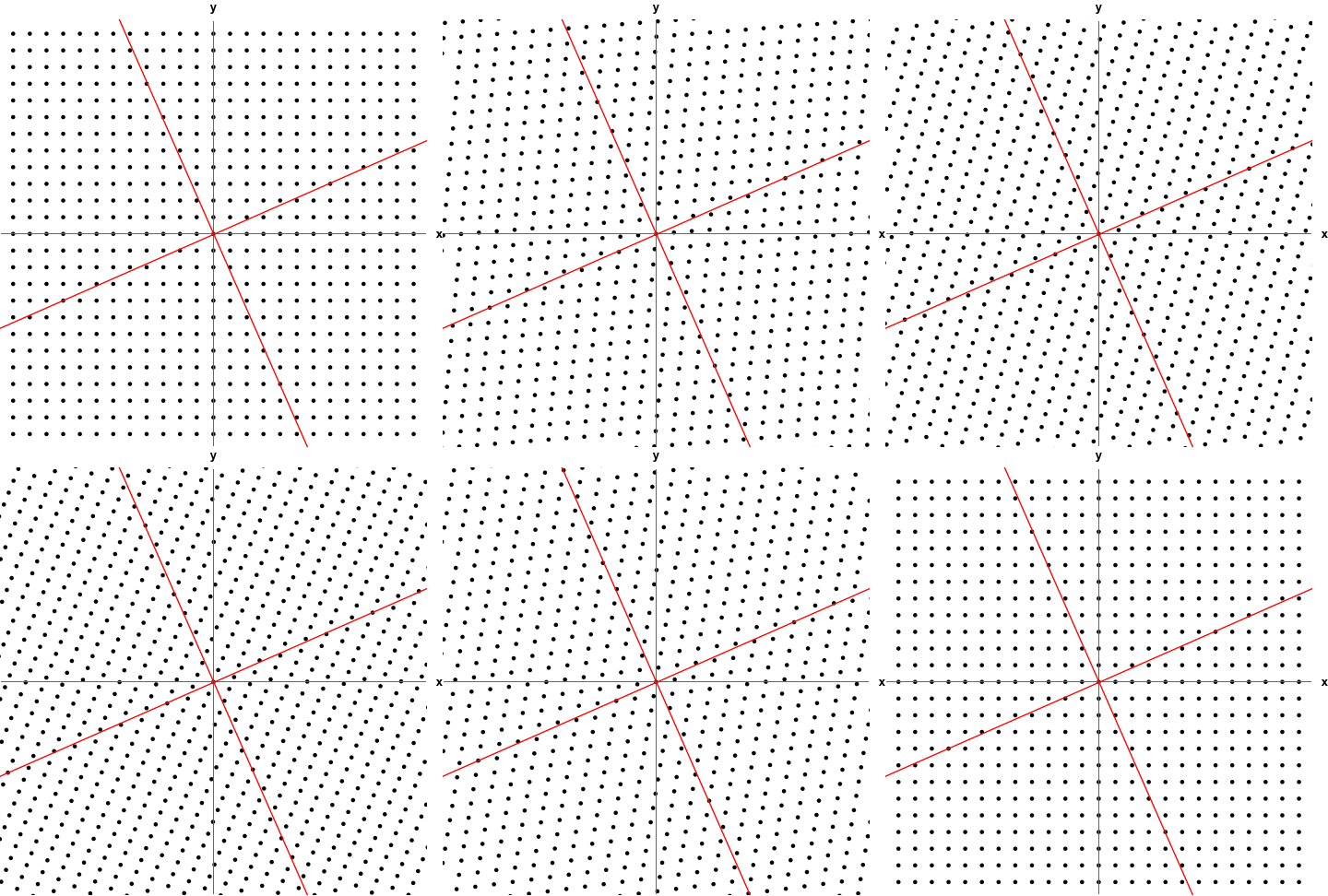
(credits: Jacopo Bertolotti, CC0
via Wikimedia Commons)

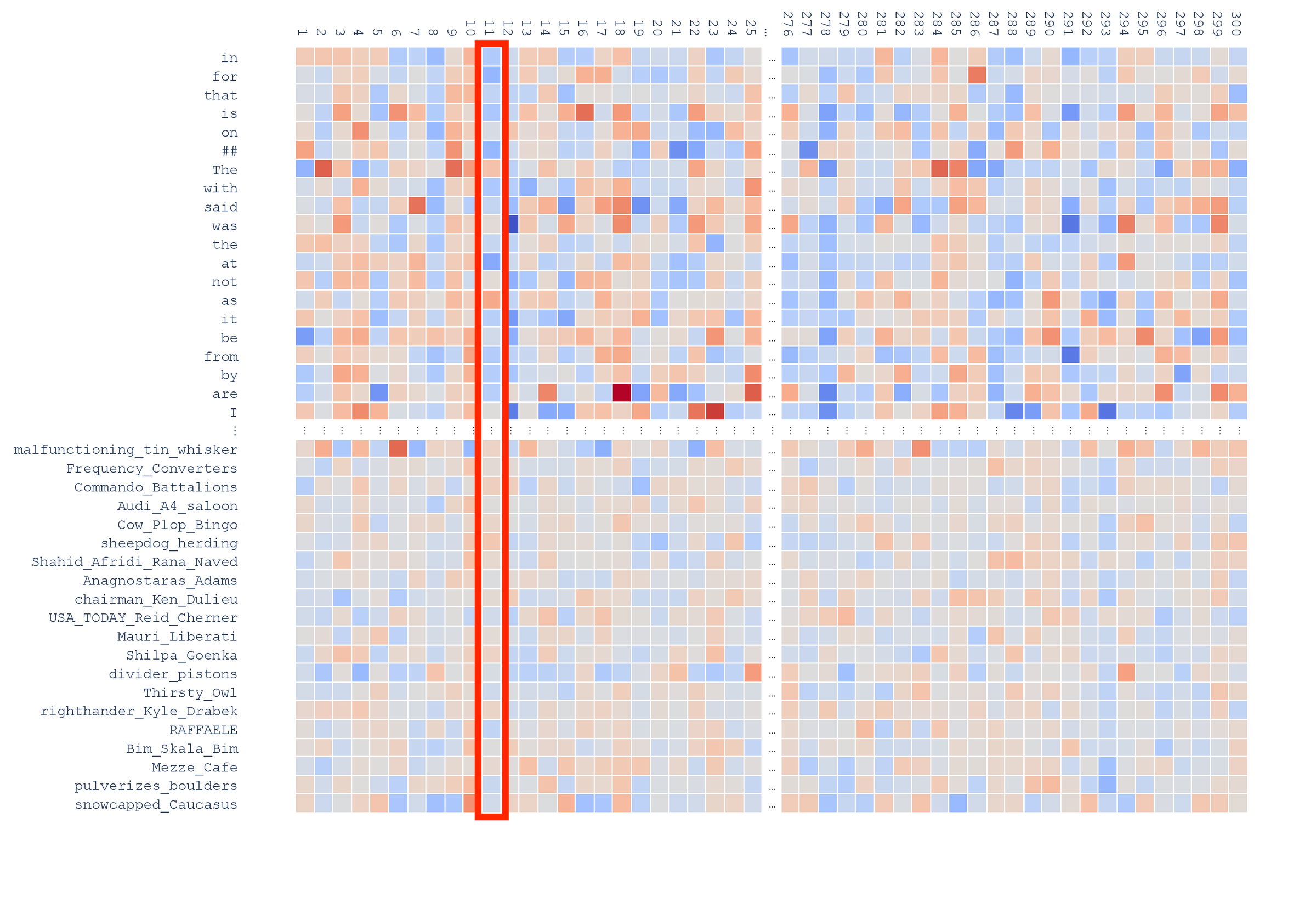
Embedding dimensions as fixed points
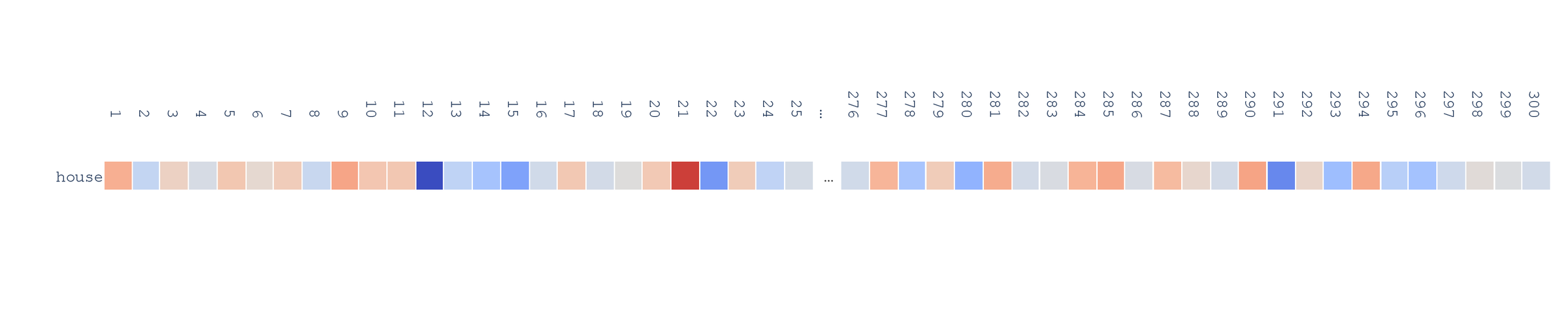
fixed point!

Chladni figures

“One can conceive of a profoundly deaf human being who has never experienced sound or music; just as such a person will gaze in astonishment at the Chladnian sound-figures in sand, find their cause in the vibration of a string, and swear that he must now know what men call sound — this is precisely what happens to all of us with language.”

Chladni figures

Structural features

Eigenvectors of \({\color{red}{M_* M^*}}\):

Eigenvalues of \({\color{red}{M_* M^*}}\) and \({\color{blue}{M^* M_*}}\):

Eigenvectors of \({\color{blue}{M^* M_*}}\):

Words
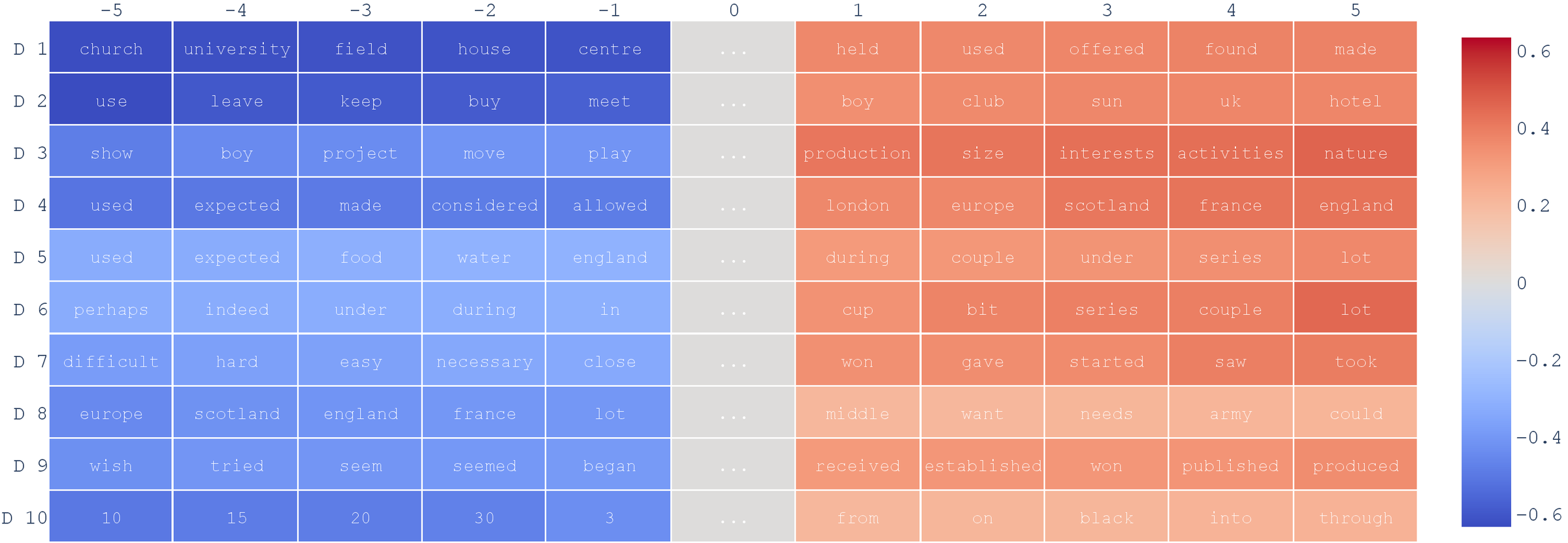
The structure of embeddings

Profunctor and nucleus structures

(Gastaldi et al., 2026b) (Gastaldi et al., 2026a; Gastaldi & Pellissier, 2021)

Critical effects of a formal perspective

Anti-dogmaticity
AI performance does not rely on any substantive property of the models,
but only on the formal objects that models implicitly approximate

Conditionality
Those formal objects establish the strict conditions
under which models can operate

Limitedness
A formal analysis of current implicit conditions can show in which way they are limited,
and how they can be changed

6. Formalism is a realization, not a betrayal, of critique

  • 1. The critique of AI is ineffectual
  • 2. The contemporary critical matrix is broken
  • 3. Critique has been dogmatic about formalization
  • 4. Formalization can ground an epistemological critique
  • 5. Formalization can inform a theoretical critique
  • 6. Formalism is a realization, not a betrayal, of critique
  • 7. Conclusions: Formalism and arbitrariness

Lévi-Strauss and the mathematics of man

In the past, the great difficulty has arisen from the qualitative nature of our studies. If they were to be treated quantitatively, it was either necessary to do a certain amount of juggling with them or to simplify to an excessive degree. Today, however, there are many branches of mathematics — set theory, group theory, topology, etc. — which are concerned with establishing exact relationships between classes of individuals distinguished from one another by discontinuous values, and this very discontinuity is one of the essential characteristics of qualitative sets in relation to one another and was the feature in which their alleged ‘incommensurability’, ‘inexpressibility’, etc., consisted.

Lévi-Strauss (1954)

The power of the formal

Derrida (1976)

“Within cultures practicing so-called phonetic writing, mathematics is not just an enclave. […] This enclave is also the place where the practice of scientific language challenges intrinsically and with increasing profundity the ideal of phonetic writing and all its implicit metaphysics (metaphysics itself)”

Deleuze (1994)

“Differential calculus is not the unimaginative calculus of the utilitarian, the crude arithmetic calculus which subordinates thought to other things or to other ends, but the algebra of pure thought, the superior irony of problems themselves — the only calculus ‘beyond good and evil’”

Foucault (2002)

“There is perhaps only one science for which one can neither distinguish these different thresholds, nor describe a similar set of shifts: mathematics […] Hence the fact that their establishment is both so enigmatic […] and so valid […]”

Structuralism is a formalism

I am not sure how interesting it would be to attempt a redefinition of what was known, at the time, as structuralism. It would be interesting, though, to study formal thought and the different kinds of formalism that ran through Western culture during the 20th century. When we consider the extraordinary destiny of formalism in painting or formal research in music, or the importance of formalism in the analysis of folklore and legend, in architecture, or its application to theoretical thought, it is clear that formalism in general has probably been one of the strongest and at the same time one of the most varied currents in 20th century Europe. And it is worth pointing out that formalism has very often been associated with political situations and even political movements. It would certainly be worth examining more closely the relation of Russian formalism to the Russian Revolution. […] That is how I would situate the structuralist phenomenon: by relocating it within the broad current of formal thought.

(Foucault, in Raulet, 1983)

Russian formalism as a generative device

“The purpose of art, then, is to lead us to a knowledge of a thing through the organ of sight instead of recognition. By ‘enstranging’ objects and complicating form, the device of art makes perception long and ‘laborious’. The perceptual process in art has a purpose all its own and ought to be extended to the fullest. Art is a means of experiencing the process of creativity. The artifact itself is quite unimportant.”

Shklovsky (1990)
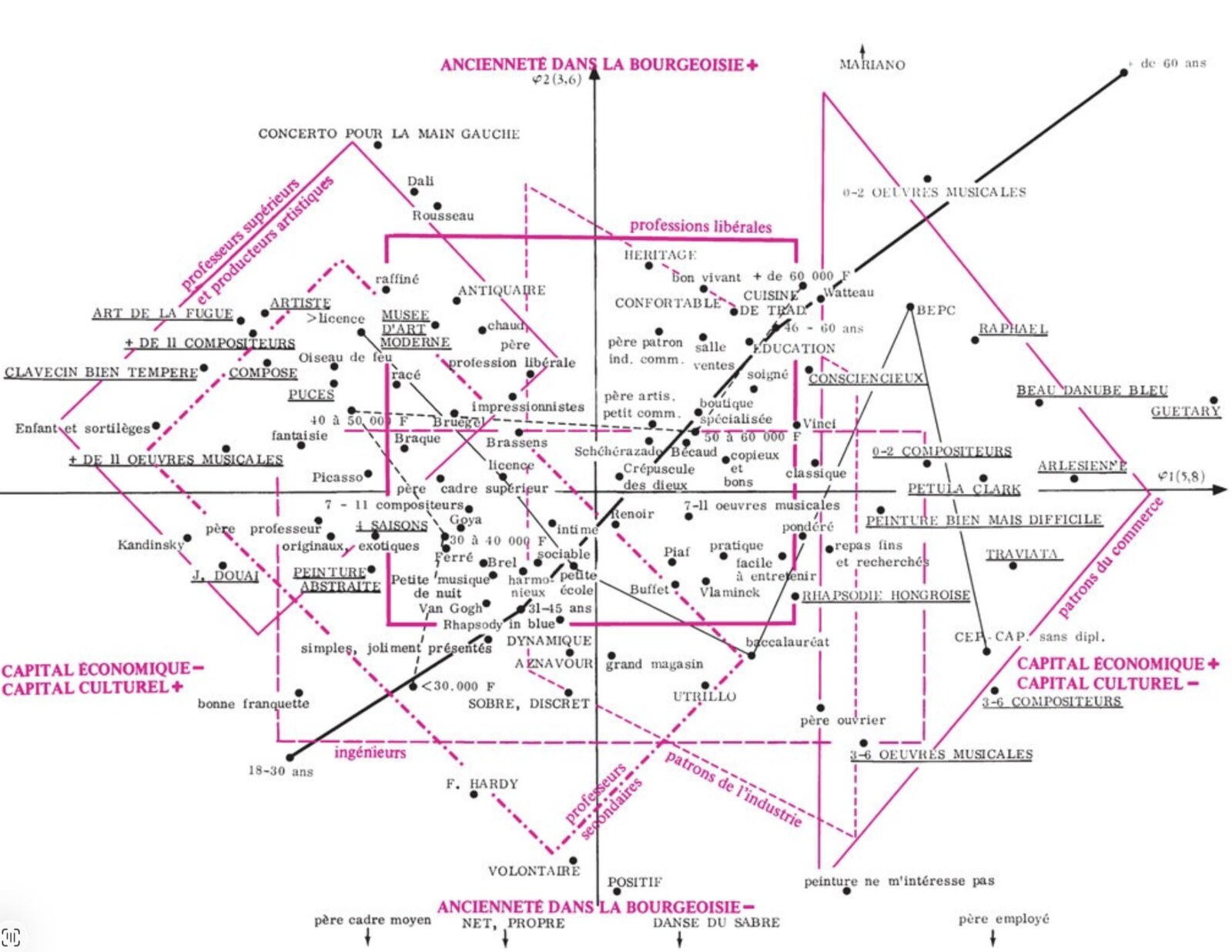
Bourdieu in embedding space

“If it is true […] that, first, the dominant class constitutes a relatively autonomous space whose structure is defined by the distribution of economic and cultural capital among its members, […] then these structures should be found in the space of life-styles […]. To endeavour to establish this, the whole set of survey data was subjected to correspondence analysis.”
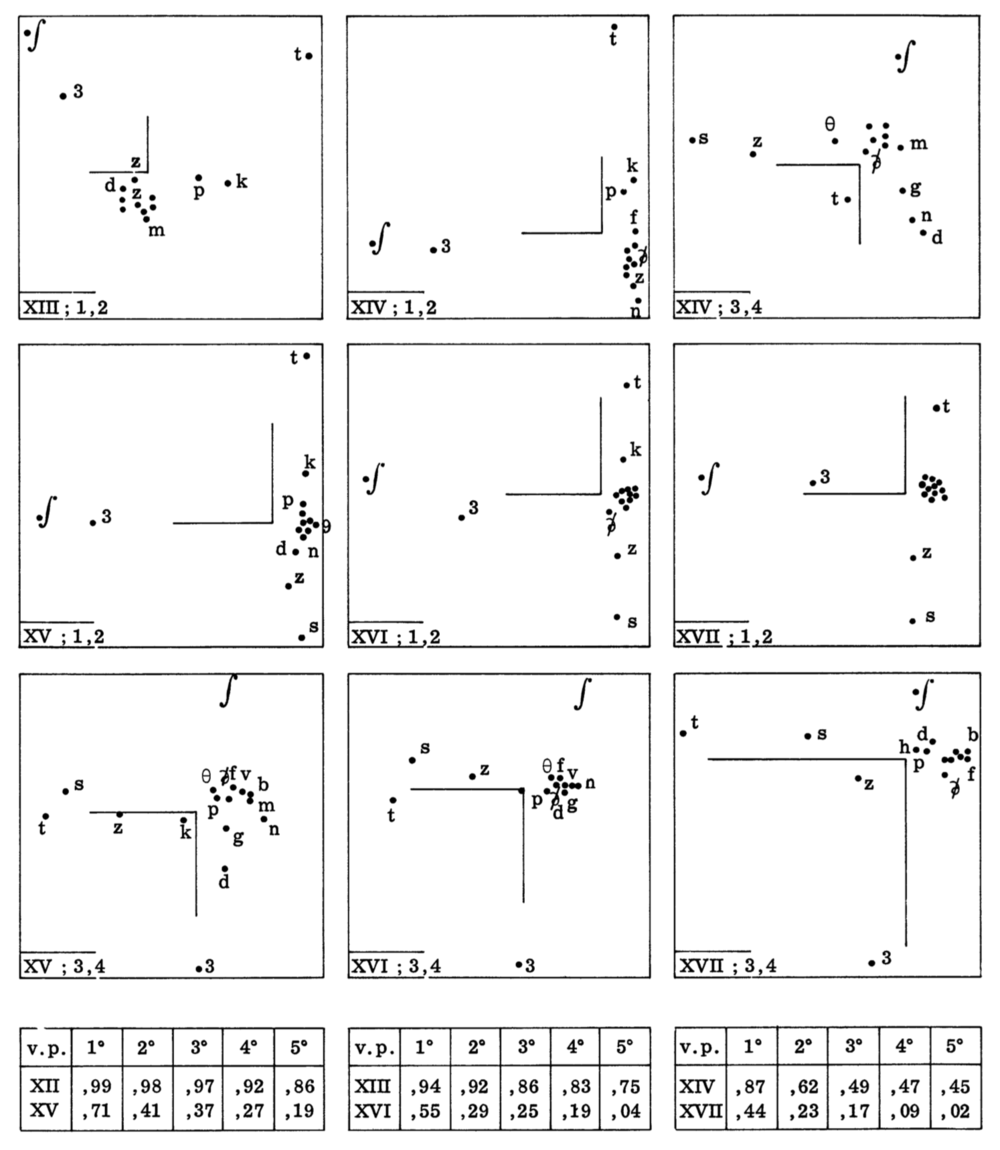
Structuralist mathematics
Architectural genius

“…all peoples have just such a mathematically divided firmament of concepts above them […] Here, one can certainly admire humanity as a mighty architectural genius who succeeds in erecting the infinitely complicated cathedral of concepts on moving foundations, or even, one might say, on flowing water; admittedly, in order to rest on such foundations, it has to be like a thing constructed from cobwebs, so delicate that it can be carried off on the waves and yet so firm as not to be blown apart by the wind.”

7. Conclusions: Formalism and arbitrariness

  • 1. The critique of AI is ineffectual
  • 2. The contemporary critical matrix is broken
  • 3. Critique has been dogmatic about formalization
  • 4. Formalization can ground an epistemological critique
  • 5. Formalization can inform a theoretical critique
  • 6. Formalism is a realization, not a betrayal, of critique
  • 7. Conclusions: Formalism and arbitrariness

Formalism and dogmatism

  • After all, it was formalism that put us in this situation. Why would more formalism get us out of it?
  • We do not want to correct AI’s formal errors, we want to exacerbate them, to see them explode in broad daylight
  • Openness and creation come from contradiction and friction, not from consistency
  • How would formalism not take our beloved materiality, difference, and friction from us?

Doesn’t formalism entail a risk of dogmatism?

Of course!

But dogmatic uses of critique are of little help against it.

Toward a critical formalism

  • Arbitrary does not mean random but unmotivated
  • Arbitrariness does not exclude necessity (Saussure, Benveniste)
  • Necessity in language is contingent
  • Regularity is the mode of existence of arbitrariness
  • As non-natural theories of regularities, formal sciences guarantee arbitrariness
  • Formalization is not naturalization
  • A critical formalism calls for a politics of the corpus
  • We need a new alliance between the formal sciences,
    the human sciences, and the arts

Reference papers

Gastaldi, J. L. (2021). Why Can Computers Understand Natural Language? Philosophy & Technology, 34(1), 149–214. https://doi.org/10.1007/s13347-020-00393-9

Gastaldi (2021)

Gastaldi, J. L., & Pellissier, L. (2021). The Calculus of Language: Explicit Representation of Emergent Linguistic Structure through Type-Theoretical Paradigms. Interdisciplinary Science Reviews, 46(4), 569–590. https://doi.org/10.1080/03080188.2021.1890484

Gastaldi & Pellissier (2021)

Bradley, T.-D., Gastaldi, J. L., & Terilla, J. (2024). The Structure of Meaning in Language: Parallel Narratives in Linear Algebra and Category Theory. Notices of the American Mathematical Society.

Bradley et al. (2024)

Gastaldi, J. L., Jarvis, S., Seiller, T., & Terilla, J. (2026). Projective metric geometry of tropical nuclei: Gap matrices, event loci, and order chambers. https://arxiv.org/abs/2601.07900

Gastaldi et al. (2026b)

Gastaldi, J. L., Jarvis, S., Seiller, T., & Terilla, J. (2026). A calculus of types in isbell nuclei. https://arxiv.org/abs/2606.03369

Gastaldi et al. (2026a)

References

Barad, K. (2007). Meeting the universe halfway: Quantum physics and the entanglement of matter and meaning. Duke University Press.
Barbut, M. (1967). Mathématiques et sciences humaines. Tome i: Combinatoire et algèbre. Presses Universitaires de France.
Bender, E. M., Gebru, T., McMillan-Major, A., & Shmitchell, S. (2021). On the dangers of stochastic parrots: Can language models be too big? Proceedings of the 2021 ACM Conference on Fairness, Accountability, and Transparency, 610–623. https://doi.org/10.1145/3442188.3445922
Bennett, J. (2010). Vibrant matter: A political ecology of things. Duke University Press.
Benzécri, J.-P. (1976). Sur le codage réduit d’un vecteur de description en analyse des correspondances. Les Cahiers de l’analyse Des Données, 1(2), 127–136.
Bourdieu, P. (1979). La distinction. Critique sociale du jugement. Les ’Editions de Minuit.
Bradley, T.-D., Gastaldi, J. L., & Terilla, J. (2024). The Structure of Meaning in Language: Parallel Narratives in Linear Algebra and Category Theory. Notices of the American Mathematical Society.
Brooks, R. A. (1991). Intelligence without representation. Artificial Intelligence, 47(1–3), 139–159.
Church, A. (1936). An unsolvable problem of elementary number theory. American Journal of Mathematics, 58(2), 345–363.
Deleuze, G. (1994). Difference and repetition. Columbia University Press.
Derrida, J. (1976). Of grammatology (G. C. Spivak, Trans.). Johns Hopkins University Press.
Dreyfus, H. L. (1965). Alchemy and artificial intelligence (Nos. P-3244). RAND Corporation.
Dreyfus, H. L. (1972). What computers can’t do: A critique of artificial reason. Harper & Row.
Dreyfus, H. L., & Dreyfus, S. E. (1988). Making a mind versus modeling the brain: Artificial intelligence back at a branchpoint. Daedalus, 117(1), 15–43.
Foucault, M. (2002). Archaeology of knowledge. Routledge.
Gastaldi, J. L. (2021). Why Can Computers Understand Natural Language? Philosophy & Technology, 34(1), 149–214. https://doi.org/10.1007/s13347-020-00393-9
Gastaldi, J. L., Jarvis, S., Seiller, T., & Terilla, J. (2026a). A calculus of types in isbell nuclei. https://arxiv.org/abs/2606.03369
Gastaldi, J. L., Jarvis, S., Seiller, T., & Terilla, J. (2026b). Projective metric geometry of tropical nuclei: Gap matrices, event loci, and order chambers. https://arxiv.org/abs/2601.07900
Gastaldi, J. L., & Pellissier, L. (2021). The Calculus of Language: Explicit Representation of Emergent Linguistic Structure through Type-Theoretical Paradigms. Interdisciplinary Science Reviews, 46(4), 569–590. https://doi.org/10.1080/03080188.2021.1890484
Gödel, K. (1934/1986). On undecidable propositions of formal mathematical systems. In Collected works (pp. 346–371). Clarendon Press Oxford University Press.
Goldberg, Y., & Levy, O. (2014). word2vec explained: Deriving Mikolov et al.’s negative-sampling word-embedding method. CoRR, abs/1402.3722.
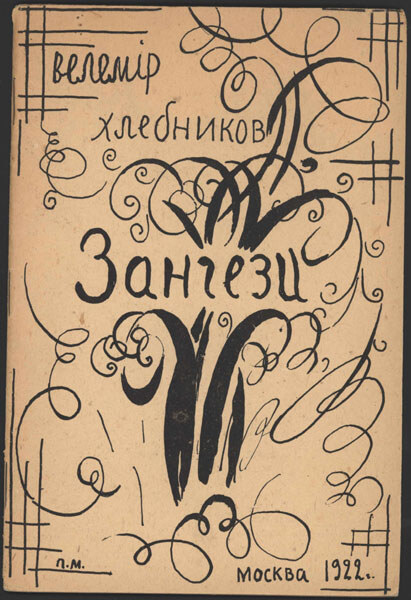
Khlebnikov, V. (1922). Zangezi.
Kirschenbaum, M. (2023). Again theory: A forum on language, meaning, and intent in the time of stochastic parrot. https://critinq.wordpress.com/2023/06/26/again-theory-a-forum-on-language-meaning-and-intent-in-the-time-of-stochastic-parrots/
Kocijan, V., Davis, E., Lukasiewicz, T., Marcus, G., & Morgenstern, L. (2023). The defeat of the Winograd schema challenge. Artificial Intelligence, 325, 103971.
Levesque, H. J., Davis, E., & Morgenstern, L. (2012). The Winograd schema challenge. Proceedings of the Thirteenth International Conference on Principles of Knowledge Representation and Reasoning (KR 2012), 552–561.
Lévi-Strauss, C. (1954). The mathematics of man. International Social Science Bulleting, VI(4).
Levy, O., & Goldberg, Y. (2014). Neural word embedding as implicit matrix factorization. Proceedings of the 27th International Conference on Neural Information Processing Systems - Volume 2, 2177–2185.
Marcus, S. (1967). Introduction mathématique à la linguistique structurale. Dunod.
Mikolov, T., Sutskever, I., Chen, K., Corrado, G., & Dean, J. (2013). Distributed representations of words and phrases and their compositionality. CoRR, abs/1310.4546. https://arxiv.org/abs/1310.4546
Nietzsche, F. (1873). On truth and lying in a non-moral sense (R. Speirs, Trans.). In R. Geuss & R. Speirs (Eds.), The birth of tragedy and other writings (pp. 141–153). Cambridge University Press.
Polanyi, M. (1966). The tacit dimension. Doubleday.
Raulet, G. (1983). Structuralism and post-structuralism: An interview with michel foucault. Telos: Critical Theory of the Contemporary, 1983(55), 195–211. https://doi.org/10.3817/0383055195
Sennrich, R., Haddow, B., & Birch, A. (2016). Neural machine translation of rare words with subword units. Proceedings of the 54th Annual Meeting of the ACL, 1715–1725.
Shklovsky, V. (1990). Art as device (B. Sher, Trans.). In Theory of prose (pp. 1–14). Dalkey Archive Press.
Suchman, L. A. (1987). Plans and situated actions: The problem of human-machine communication. Cambridge University Press.
Turing, A. (1937). On Computable Numbers, with an Application to the Entscheidungsproblem. Proceedings of the London Mathematical Society, s2-42(1), 230–265. https://doi.org/10.1112/plms/s2-42.1.230
Underwood, T. (2023, October 15). The empirical triumph of theory. https://critinq.wordpress.com/2023/06/29/the-empirical-triumph-of-theory/
Varela, F. J., Thompson, E., & Rosch, E. (1991). The embodied mind: Cognitive science and human experience. MIT Press.
Vaswani, A., Shazeer, N., Parmar, N., Uszkoreit, J., Jones, L., Gomez, A. N., Kaiser, Ł., & Polosukhin, I. (2017). Attention is all you need. In I. Guyon, U. V. Luxburg, S. Bengio, H. Wallach, R. Fergus, S. Vishwanathan, & R. Garnett (Eds.), Advances in neural information processing systems (Vol. 30). Curran Associates, Inc. https://proceedings.neurips.cc/paper_files/paper/2017/file/3f5ee243547dee91fbd053c1c4a845aa-Paper.pdf